







This is the comprehensive guide to ghee in Indian cooking. Learn about how to make the ingredient, the different varieties that you can buy, what makes ghee different from other fats like butter/clarified butter, and its use cases in Indian cooking.
Jump to:
- What is it?
- Ghee vs. Butter vs. Clarified Butter vs. Brown Butter
- Cultured Ghee vs. Regular Ghee
- Buffalo Milk Ghee (White Ghee) vs. Cow Milk Ghee (Yellow Ghee)
- A1 ghee vs. A2 ghee
- Can I substitute ghee and butter?
- How to make ghee at home
- Where to buy ghee?
- Homemade vs. store-bought ghee
- Best practices for storing ghee
- Ghee-Friendly Diets
- Recipes that use ghee
What is it?
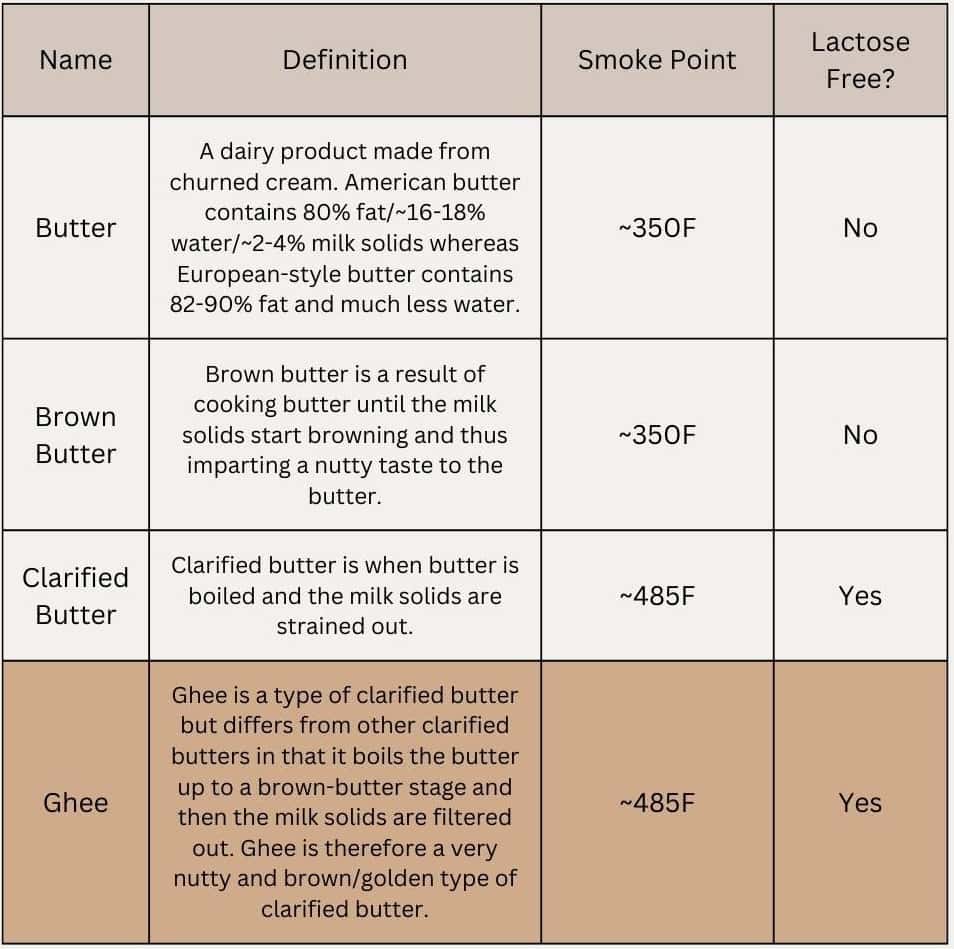
Ghee is a type of clarified butter where the milk solids are filtered out from the butter, leaving just the fat behind. Ghee is a fat extensively used in Indian cooking; it is great for high heat cooking, is lactose-free, and has a rich buttery taste.
Ghee vs. Butter vs. Clarified Butter vs. Brown Butter
Cultured Ghee vs. Regular Ghee
Cultured ghee is ghee made from cultured butter and regular ghee is made with regular butter. In general, cultured butter is made with yogurt or a dairy product that has live cultures of good bacteria whereas regular butter is made with cream that does not have those live cultures.
Cultured butter has a tangy and complex flavor compared to regular butter because of the fermentation that occurs with the bacteria. That same delicious flavor is then passed along to the cultured ghee. However, cultured ghee does not have the same live cultures as cultured butter because the bacteria is killed in the ghee making process.
Buffalo Milk Ghee (White Ghee) vs. Cow Milk Ghee (Yellow Ghee)
Simply stated, buffalo milk ghee is made with buffalo's milk (predominantly water buffalo) and cow milk ghee is made with cow's milk. But let's dive into the differences:
- Buffalo milk ghee tends to be richer than cow milk ghee. The reason is that buffalo milk has more fat than cow milk so the extra fat leads to a richer tasting ghee.
- Buffalo milk is white and cow milk is yellow. This is because buffalos can convert beta-carotene found in grass to Vitamin A more efficiently than cows. Thus the higher beta-carotene levels in cow's milk can indicate how much grass that the cow ate.
- Buffalo milk also as more protein, calcium, and other vitamins compared to cow milk, yielding those same properties in ghee.
- Buffalo milk/Buffalo milk ghee is hard to get in the United States but is more readily available in India. Buffalo milk based ghee is often called white ghee whereas cow milk based ghee is often called yellow ghee.
A1 ghee vs. A2 ghee
The classification of dairy products as A1 vs. A2 has to do with cow breeds and the resulting amino acid structures that those cows' dairy products have. A1 cows are typically from Western countries and A2 cows are from India and have a distinctive hump feature. As a result, A1 ghee is ghee made with milk from A1 cows and A2 ghee is ghee made from A2 cows. Although research on the benefits of A1 vs. A2 dairy products is still in progress, initial studies find promising results that A2 dairy products may be beneficial for those with dairy intolerances and digestive issues.
Can I substitute ghee and butter?
You can *almost* always substitute ghee for butter, but not necessarily butter for ghee. Here are some more in-depth rules to take into consideration when making swaps:
- Do substitute ghee for butter in cooking applications. When substituting ghee for butter in cooking, the final dish will have a nuttier or brown butter taste that is more prominent than a neutral butter taste.
- Do substitute ghee for butter in baked goods that call for melted butter.
- Do NOT substitute ghee for butter in baked goods that call for chilled butter. Examples are recipes for pie dough, croissants, and biscuits as these recipes rely on the water in butter to evaporate in the oven, thus creating steam and the flaky layers.
- In general, if substituting ghee for butter in baking applications, expect the final product to be crispier as there is as much as 20% less water in ghee compared to butter.
- Do NOT substitute butter for ghee in high heat applications as the butter can burn. Example: Cooking chicken on high heat in an oven or on stovetop on high heat with butter being the main fat!
- Do substitute butter for ghee when it is in low heat/no heat coking applications. Examples include spreading on toast or sautéing veggies/protein on low heat.
How to make ghee at home
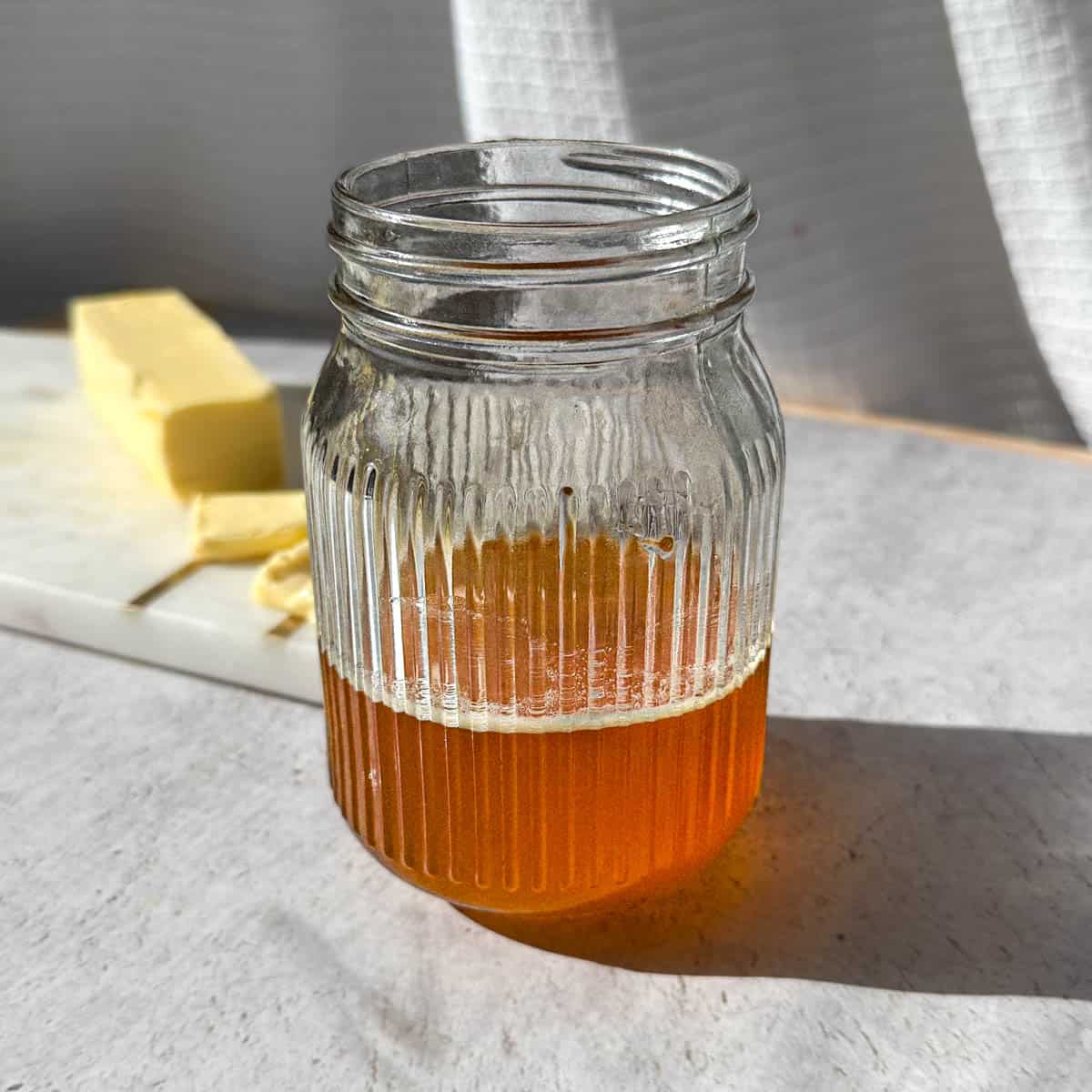
Making ghee from butter is one of the easiest things to do! It's as simple as buying a high quality butter, boiling it, and straining the milk solids out! My recipe for homemade ghee from butter goes over the intricacies of sourcing good quality butter and tips for making delicious homemade ghee from butter.
Where to buy ghee?
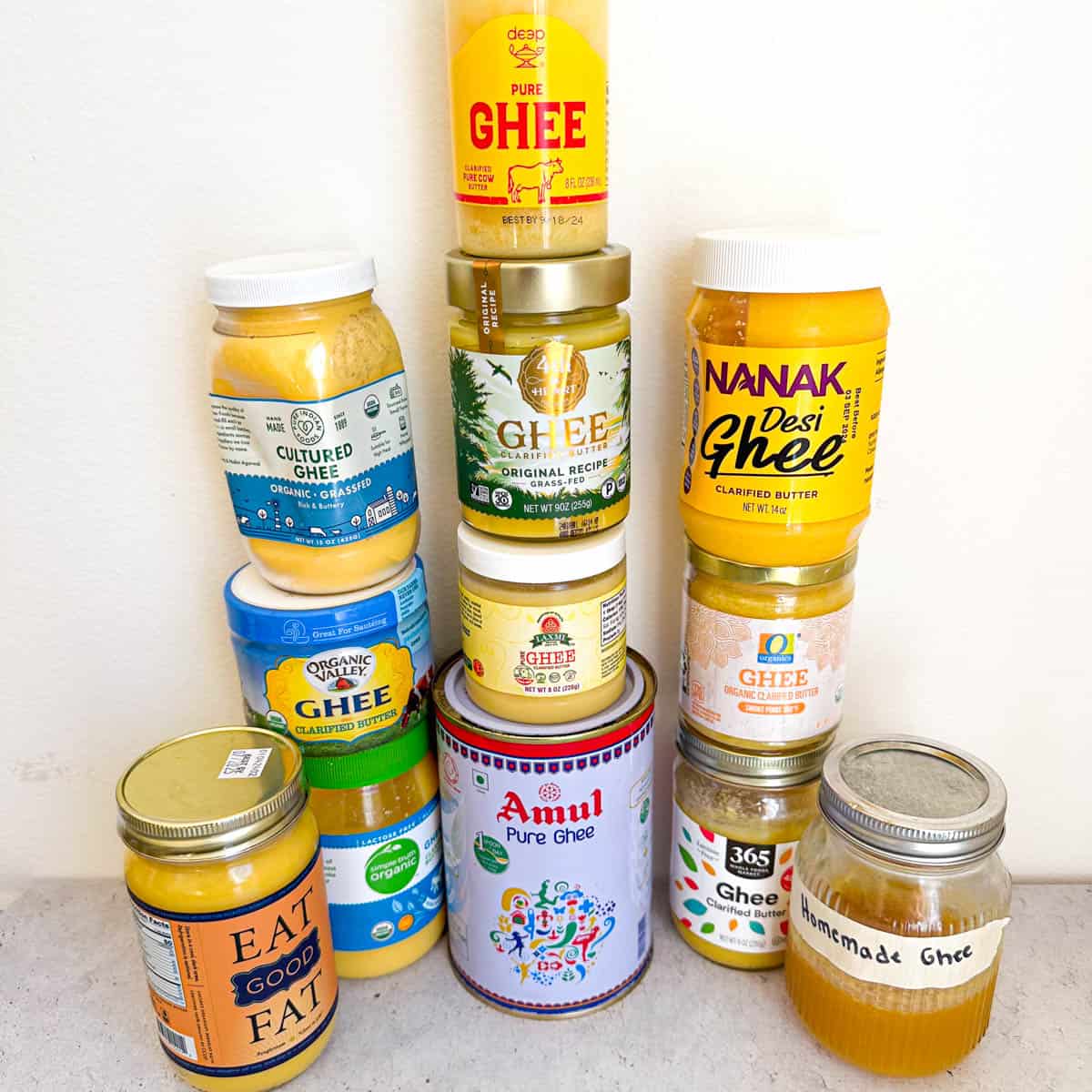
Ghee is now so popular that it has made its way onto the shelves of nearly every American grocery store out there. You can buy ghee in Indian grocery stores, American grocery stores, and online on Amazon.
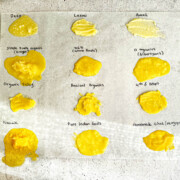
There are so many brands of ghee on the market, but I've listed some of my favorite Indian and American brands below. However, if you want to really understand why these are my favorites and what to look for when buying ghee, check out this blog post where I test eleven different brands of ghee and give recommendations and the reasons why I love my favorites.

Pure Indian Foods Cultured Ghee
Buy Now →
4th & Heart Original Grass-Fed Ghee
Buy Now → Buy Now →
  Buy Now →
 Homemade vs. store-bought ghee
In general, I prefer making homemade ghee to buying it. But here are the pros and cons of each choice so you can do what is right for you:
Pros of Buying:
- It's convenient and saves time.
- There are a lot of great farmers and businesses making great quality ghee which you can help support.
Cons of Buying:
- It costs more than making ghee at home. You can check out the analysis below on the price of homemade ghee vs. store-bought ghee.
- You can't control the nuttiness of ghee like you can at home!
Pros of Making Ghee:
- You can control how nutty the ghee is based on how long you cook the milk solids.
- It tends to be cheaper than the equivalent quality of store-bought ghee.
- You can control the quality of the ingredients that go in.
- You know the freshness based on date when it's made.
Cons of Making Ghee:
- It takes more time/effort to make ghee than to buy it.
Price analysis of homemade vs. store-bought ghee
The price range of ghee and butter varies drastically. In general for homemade ghee, every 2 cups of butter bought yields about ~1.6 - 1.75 cups of ghee. So the price of homemade ghee directly correlates with the quality of butter used.
I made ghee from Kerry Gold unsalted butter which is an organic, grass-fed butter that cost $9.58 for 2 cups of butter and yielded 14 ounces of ghee. When I compared it with my chart of prices for eleven ghee brands, the cheapest grass-fed organic ghee, which was Simple Truth Organic, was $10.99 for 14 ounces.
The price difference is even greater when you analyze the taste of the homemade ghee and compare it to a ghee brand that has an equivalent taste like Pure Foods Indian Ghee (23.23/15 ounces).
So in general, making ghee at home is cheaper AND tastier than buying it at the store.
Best practices for storing ghee
Because the milk solids have been strained from the ghee, it has a really long shelf life. Ghee, when in a sealed jar, can last at room temperature for a year and up to 6+ months after opened! Once the ghee is open, just be careful to use clean utensils when scooping the ghee out and be sure to close the ghee to reduce its exposure to bacteria. However, for an even longer shelf life (1+ years), ghee can be placed in the fridge. You will know if ghee has gone bad if you smell a rancid smell from the ghee similar to the smell/taste of bad butter.
Ghee-Friendly Diets
- Lactose Free - Since the milk solids are strained from the dairy product, ghee is lactose-free. This makes it a great butter substitute for those who are lactose intolerant.
- Gluten-Free
- Whole 30 Approved - Approved because it doesn't have lactose!
- Keto Certified - Some folks on this diet mix ghee with their coffee (also known as bulletproof coffee) to increase their fat intake.
Recipes that use ghee
Here are some tasty recipes that use ghee, ranging from snacks to nourishing meals!
This is a detailed article about ghee! Please leave a comment below letting me know what you thought of this article and if it was helpful to you! I always love hearing your questions and your comments 🙂
Leave a Reply