



• Skip to primary navigation
  • Skip to main content
  • Skip to primary sidebar
Moon Rice
  • Home
  • Recipes
  • Classes
  • About
menu icon
go to homepage
  • Home
  • Recipes
  • Classes
  • About
    • Facebook
    • Instagram
    • TikTok
  • search icon
    Homepage link
    • Home
    • Recipes
    • Classes
    • About
    • Facebook
    • Instagram
    • TikTok
  • ×
    • A hand holding boondi laddu and the remaining laddus on a sheet tray.
      Boondi Laddu
    • Curried egg salad with cottage cheese and green onions on top of toast on a gray plate.
      High Protein Curried Egg Salad
    • Two slices of edamame chaat avocado toast. The toast has shelled edamame, cut red onions, tomatoes, green bell pepper, cilantro, salt, chaat masala, and thin sev on top.
      Edamame Chaat Avocado Toast
    • Whole coriander seeds next to ground coriander powder
      How to Stock Your Spice Pantry: Whole vs. Ground Spices
    • 10 essential Indian spices laid out in their spice containers. The spices from bottom left to the top are green cardamom, Kashmiri chili powder, turmeric powder, cumin seeds, chaat masala, coriander seeds, black peppercorn, cinnamon sticks, mustard seeds, and asafetida (hing).
      10 Essential Indian Spices + 30 Recipes That Use Them
    • Fluffy stovetop basmati rice in a bronze platter.
      How to Cook Basmati Rice on the Stovetop
    • 4 indian vegetable sides photos. Top left is of cabbage poriyal, top right is of a chickpea chaat salad, bottom left is of crispy kale chaat, and bottom right is of tamarind glazed brussel sprouts.
      Indian Vegetable Side Dishes
    • Pictures of high protein Indian dishes like Black eyed peas curry, chow chow dal, chickpea sundal, and malai chicken kebabs.
      High Protein Indian Recipes
    • A plate with Indian turmeric yellow rice.
      Indian Turmeric Yellow Rice
    • Two glasses of chaat spiced pomegranate mocktail with a candied ginger garnish.
      Chaat Spiced Pomegranate Mocktail
    • A bowl filled with a kala chana or chickpea salad. The salad has black chickpeas, pickled onions, cucumbers, tomatoes, mint, cilantro, and toasted peanuts.
      Kala Chana (Black Chickpea) Salad
    • A bowl with kala chana sundal or sauteed black chickpeas with Indian spices in a small bowl.
      Kala Chana Sundal | Sautéed Black Chickpeas
    Home > Recipes > Desserts

    Peanut Chikki (Peanut Brittle with Jaggery)

    By: Shri Repp • Posted: 10/13/23 • Updated: 05/01/24

    Jump to Recipe

    Peanut chikki is a crunchy and sweet peanut brittle made with jaggery, offering a deep molasses flavor that sets it apart from regular brittle. It is the ideal dessert for holiday or candy boxes.
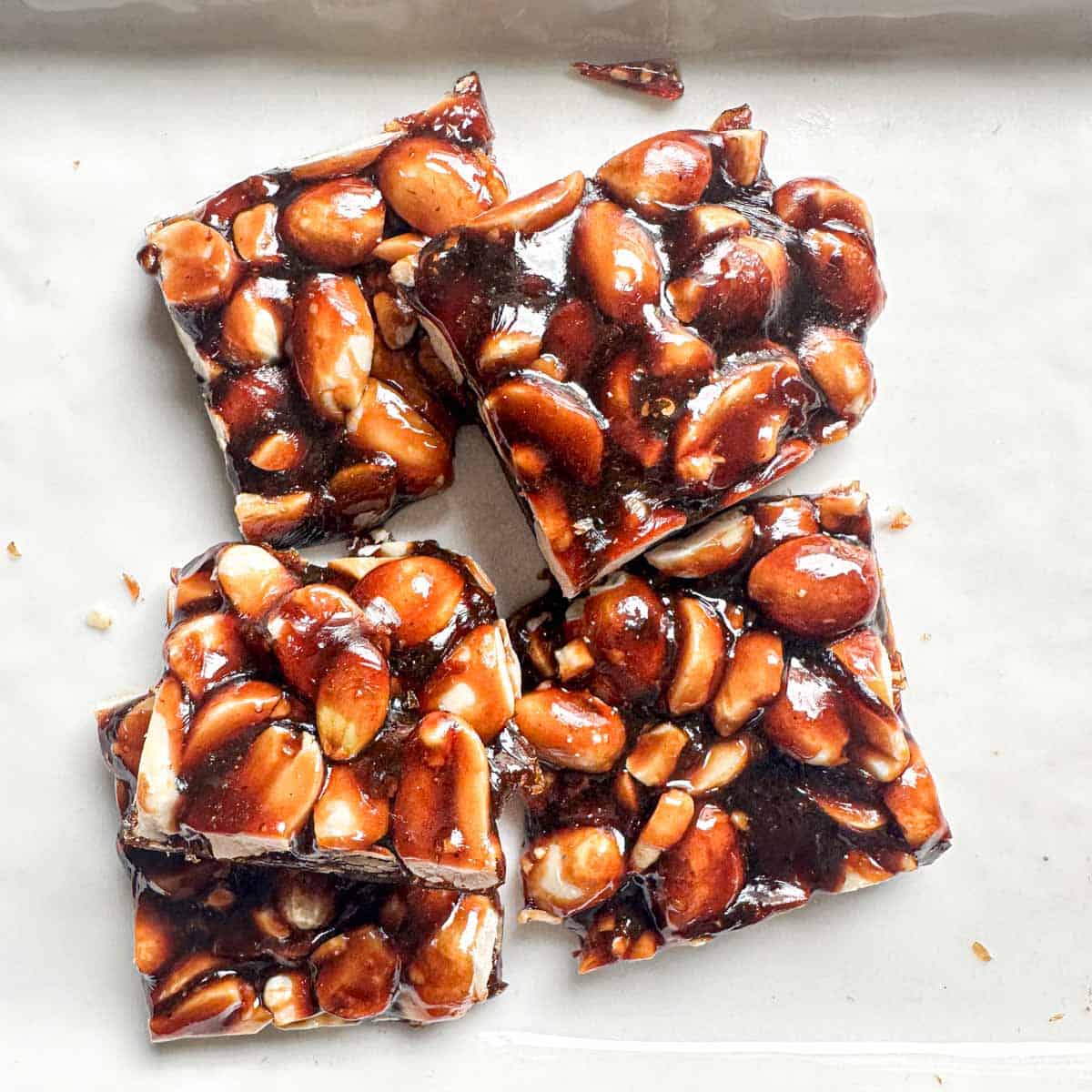
    Chikki aka jaggery peanut brittle squares on a white plate.
    Jump to:
    • What is jaggery?
    • Substitutes for peanuts
    • Perfect temperature for chikkis
    • How to make chikki without a candy thermometer
    • Tips for making chikkis
    • Frequently Asked Questions
    • Peanut Chikki (Peanut Brittle with Jaggery)
    • Other recipes you will love

    Chikki is a candy that is especially fun to make during the holidays and pack into Diwali gift boxes. You can check out this article on how to create a homemade Deepavali/Diwali gift box filled with other delicious Indian sweets.

    What is jaggery?

    Jaggery, also known as gur (Hindi) or vellam (Tamil), is unrefined cane sugar. I prefer getting jaggery in its powder form as it is easy to measure. Jaggery adds a deep molasses flavor to the peanut brittle that makes it sweet and complex. You can easily find jaggery powder or jaggery blocks online. If you want to learn more about jaggery and its substitutes checkout this blog post all about the ingredient.

    Image of Jaggery Powder

    Jaggery Powder

    Buy Now →

    Substitutes for peanuts

    Chikkis can be made with a whole host of crunchy elements besides peanuts. Here are some alternatives that would work great in place of peanuts:

    • Pistachios (slivered or chopped)
    • Blanched Almonds (slivered)
    • Puffed Rice
    • Sesame Seeds

    Perfect temperature for chikkis

    The hardest part of making chikkis is understanding when the dessert is done. This candy is so much easier to make if you have a candy thermometer to help guide you. It is important to get the chikki to the hard crack stage which lies between 300F and 310F to get it to be crunchy. However, because the temperature of the jaggery syrup rises rapidly, the instructions say to cut the heat at 290F as the jaggery will continue to increase in temperature from the residual heat of the pan. If you get beyond this temperature range, the chikkis will have a burned flavor, and if you are under this temperature, the chikkis will be chewy and sticky rather than crunchy.

    Image of Candy Thermometer

    Candy Thermometer

    Buy Now →

    How to make chikki without a candy thermometer

    If you don't have a candy thermometer, you can still make chikkis, although it may take a little bit of trial and error as you master figuring out the doneness. Simply have a small bowl with ice water nearby while making the jaggery syrup. As the jaggery starts bubbling, use a greased metal or wooden spoon to take a small bit and drop it in the ice cold water. If the jaggery syrup hardens into a candy structure, you are ready to cut the heat. If the jaggery syrup is still malleable and soft, the jaggery needs more time on the stove. As the syrup gets hotter, lower the heat so as not to burn the sugar and do more frequent checks for doneness.
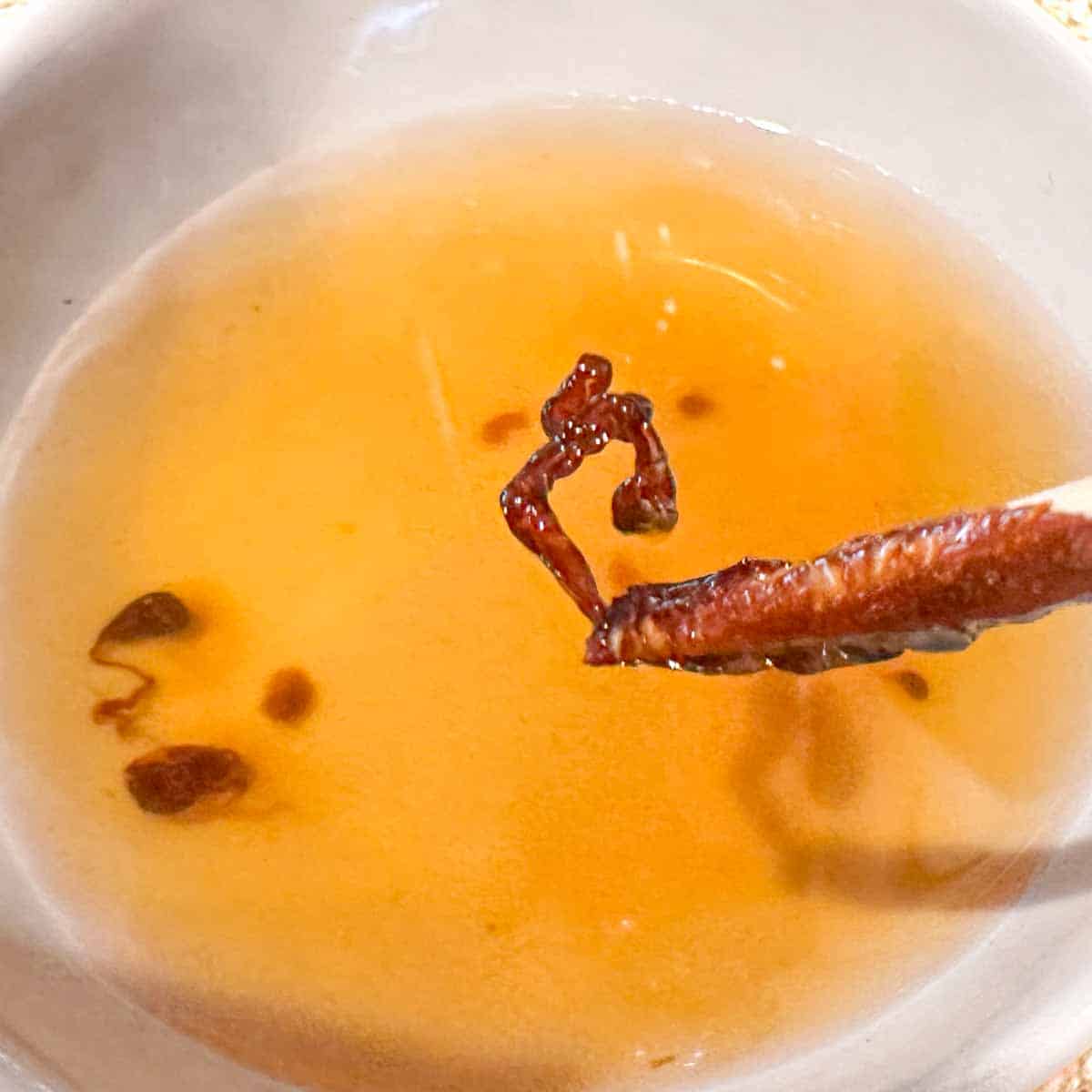
    Jaggery syrup added into ice cold water. The syrup hardens into a hard candy.

    Tips for making chikkis

    • Grease the top and bottom of two sheet trays to ensure that chikkis don't stick. The sheet trays will help you flatten the brittle without having to directly touch the hot candy.
    • Do not use a non-stick pan and plastic utensils. The jaggery syrup will get to a high heat so it is important not to use a pan with a non-stick coating that can degrade while making this candy. Again, with high heat, plastic utensils can melt or burn so avoid using them.
    • Avoid mixing the jaggery sugar in the pot. Once jaggery and water start simmering on the stovetop, avoid mixing the syrup. If the syrup gets onto the sides of the pan, it can burn and crystalize before the rest of the sugar syrup is ready.
    • Clean pots and pans with stuck brittle by boiling hot water. If there are bits of hardened and stuck-on caramel on the pots or spoons that you are using, it is helpful to add water to the pot and let it simmer to soften the caramel and loosen it from the pot.
    • Use a candy thermometer to gauge the perfect timing to remove the candy. You can read here about the right temperature to take your chikkis out as well as tips to make chikkis without a candy thermometer.
    • Store peanut chikkis at room temperature, not in the fridge. Storing the chikkis in the fridge will cause them to weep which means that there will be layers of water on the surface, which will cause them to soften and become an unpleasant texture.

    Frequently Asked Questions

    Where do I get jaggery?

    You can buy jaggery in powdered form at an Indian grocery store or online. Learn more about how to source in this blog post all about jaggery.

    What is a good substitute for jaggery?

    Good substitutes for jaggery are palm sugar, muscavado sugar, or brown sugar.

    What are substitutes for peanuts?

    You can make this brittle with your other favorite nut, sesame seeds, or puffed rice.

    Why is my chikki chewy instead of hard?

    The most likely cause is that the jaggery syrup was not heated to a temperature between 300F - 310F, causing the chikki to be chewy. The other common mistake is refrigerating the chikkis, which will cause them to weep and get an unpleasant texture.

    Why does the recipe state to stop cooking at 290F?

    Even though hard crack state is 300F, it is better to turn off the heat at 290F because the jaggery syrup will continue to increase in temperature from the residual heat of the pan.

    How do I make chikkis without a candy thermometer?

    You can drop a bit of the jaggery syrup into cold water to test if the chikkis harden properly. Read more about how to do this here.

    How do I clean my pots and pans after making chikkis?

    Add water and boil on the stove until the jaggery sugar softens. This will make it much easier to clean off the pots and pans that have hard candy stuck to them.

    How long do chikkis last?

    Chikkis will last at room temperature for 2+ weeks. The main issue will be the peanuts getting rancid. So it is safe to eat them as long as the peanuts taste fine to you.
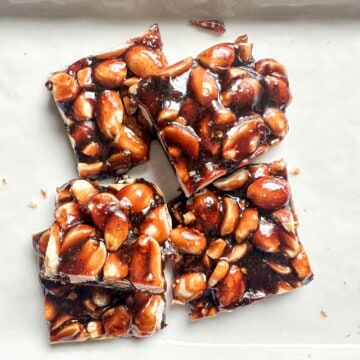
     

    Chikki aka jaggery peanut brittle squares on a white plate.

    Peanut Chikki (Peanut Brittle with Jaggery)

    Shri Repp
    Peanut chikki is a crunchy and sweet peanut brittle made with jaggery, offering a deep molasses flavor that sets it apart from regular brittle. It is the ideal dessert for holiday or candy boxes.
    Print Recipe Pin Recipe
    Cook Time 20 minutes mins
    Course Dessert
    Servings 12 pieces

    Product Reccs

    Jaggery Powder
    Jaggery Powder
    Candy Thermometer
    Candy Thermometer
    Prevent your screen from going dark

    Ingredients
     

    • ¼ cup (65 g) water
    • 1 cup (150 g) jaggery powder
    • ⅛ teaspoon cardamom powder
    • 1 cup (150 g) salted roasted peanuts
    • vegetable oil to grease

    Instructions
     

    1. Take two 9x13 sheet trays. Grease the top of one sheet tray, which you will pour the chikki onto, and the underside of the other, which you will use to help flatten the brittle, with vegetable oil.
    2. Clip a candy thermometer to a heavy-bottomed pot. Add ¼ cup (65 g) water, 1 cup (150 g) jaggery powder, and ⅛ teaspoon cardamom powder and turn the heat on to medium-low heat. Do not mix the liquid as this can cause crystallization.
    3. Allow the mixture to boil and reach a temperature of 290 Fahrenheit. Immediately turn off the heat. If you do not have a candy thermometer, use a greased spoon to take a bit of the mixture and drop into ice cold water. The sugar should crystalize into a hard, lollipop candy texture if it is at the right temperature. You can read more about this technique here.
    4. Work quickly to add peanuts and mix with a wooden spatula.
    5. Pour the warm mixture onto the greased sheet tray. Use the other sheet tray to press down and flatten the chikki. You can use the help of a wooden spoon or a greased metal spatula to help form the chikki into a rectangle.
    6. While chikki is still warm, use a greased knife to cut the chikki into pieces. Allow the chikki to cool completely before eating. Chikki should not be refrigerated and will last at room temperature for 2+ weeks.
    If you tried this recipe, please consider leaving a comment and star rating below! It makes my day and your feedback helps the blog immensely.
    Did you make this recipe?Tag @moonriceshri so I can see your amazing creation!

    Other recipes you will love

    • Homemade Diwali Sweets and Snacks Box
    • Kaju Katli
    • Khajur Burfi (Date and Nut Roll)
    • Kesar Malai Peda
    • Kesar Mango Ice Cream
    • Pineapple Kesari
    « Lychee Rose Mocktail
    Cranberry Achar (Indian Style Cranberry Pickle) »

    Reader Interactions

    Leave a Reply Cancel reply

    Your email address will not be published. Required fields are marked *

    Recipe Rating


    Primary Sidebar

    Photo of Shri Repp waving

    Hi! I'm Shri!

    I'm a former Software Engineer turned full time culinary instructor and food writer. My mission with the Moon Rice website is to be your go-to resource for Indian cooking by providing well-tested recipes and in-depth insights that empower you to confidently cook Indian food at home.

    Learn more
    International association of culinary professionals digital media awards finalist badge
    Moon Rice is an IACP finalist for best individual food blog!

    Indian Food Science

    • Which rice is the best for making dosas. Four cups with ponni rice, idli rice, basmati rice, and jasmine rice on a plate.
      What Rice Yields the Best Dosa?
    • Crispy puris for pani puri
      Crispy Puris for Pani Puri
    • 12 brands of ghee spread on parchment paper with the names of the brand above them in marker. Describing the brands from top to bottom and from left to right. Deep brand ghee is on top with a liquidy and grainy consistency that is white. Laxmi brand is creamy and pale white. Amul brand is grainy but solid and also pale. Next row has simple truth organic, 365 foods, and O Organics. Simple truth is liquidy, light yellow, and grainy. 365 foods is grainy, liquidy, and yellow. O organics is yellow and liquidy. Next row has organic valley that is smooth, creamy, and pale yellow. Ancient organics is creamy and light yellow. 4th & heart is light yellow and creamy. Nanak is bright yellow, grainy, and liquidy. Pure Indian foods is grainy, slightly liquidy, and light yellow. Last but not least is homemade ghee made from kerry gold butter and it is liquidy, slightly liquidy, and darker yellow.
      Best Brands of Ghee To Buy
    • A photo with four glass cups of gulab jamuns. 3 of the glasses have an x icon indicating that those are mistakes. 1 glass has a green check mark indicating it is the correct way to make a gulab jamun.
      Common Gulab Jamun Mistakes and Tips for Solving Them

    Indian Cocktails/Mocktails

    • Nimbu pani cocktail with limes and lime zest in the background
      Spicy Nimbu Pani Cocktail | Indian Lime Drink
    • A brown hand holding lychee rose mocktail in a glass with pink hued glasses in the background.
      Lychee Rose Mocktail
    • Indian style watermelon juice with chaat masala
      Indian Style Watermelon Juice with Chaat Masala
    • Gulab jamun cocktail or a saffron gin cocktail in a coupe class with a strand of saffron on the top.
      Gulab Jamun Cocktail (Saffron Gin Cocktail)

    Footer

    • Copyright © 2024 - Moon Rice
    • Recipe Index
    • About
    • Privacy Policy
    • ↑ back to top