






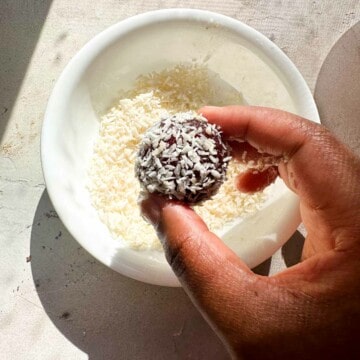
Dry gulab jamuns are the perfect one-bite Indian dessert to add to your holiday dessert box. These fried milk balls are briefly soaked in a sweet syrup and then coated with confections like coconut flakes and crushed nuts.
Jump to:
What are dry gulab jamuns?
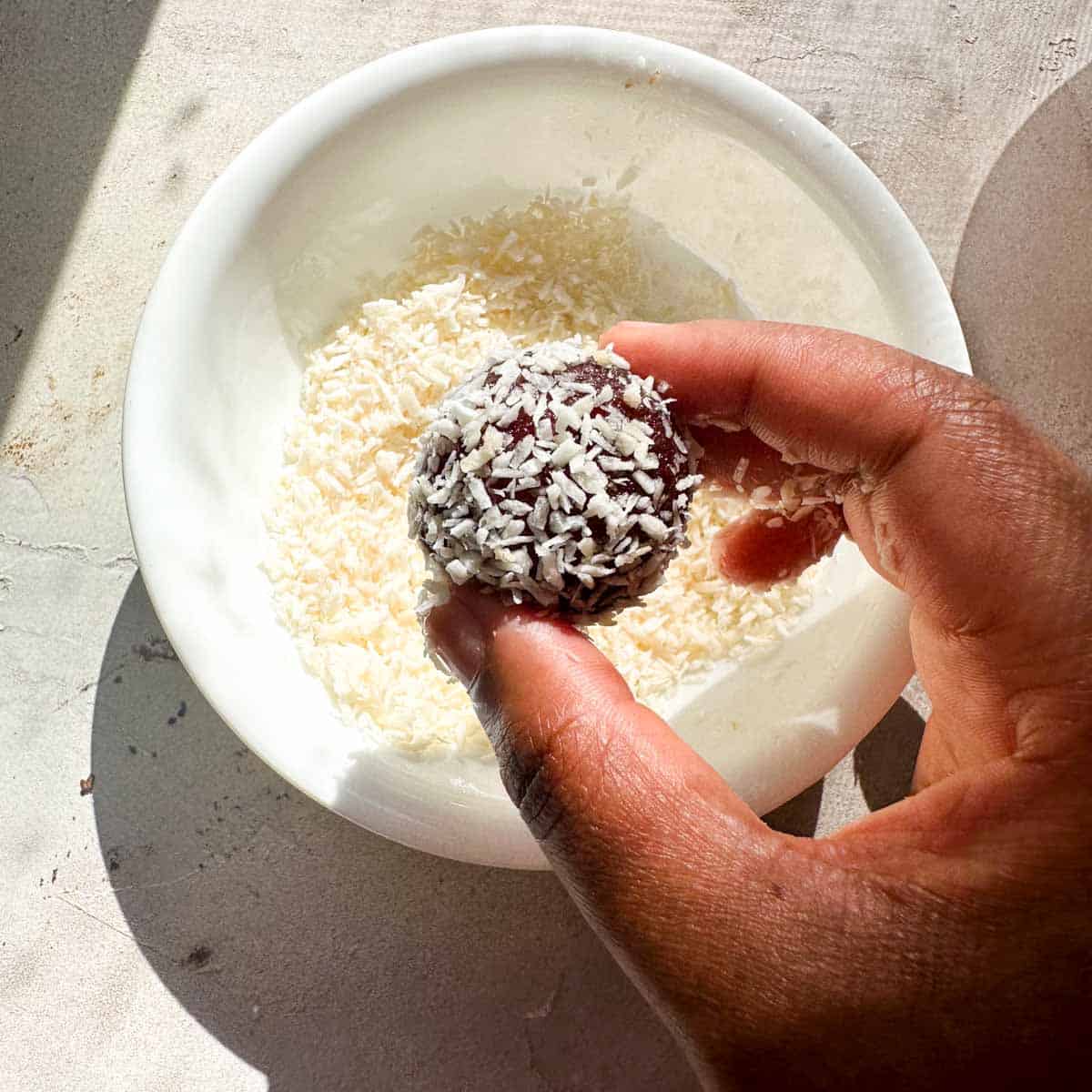
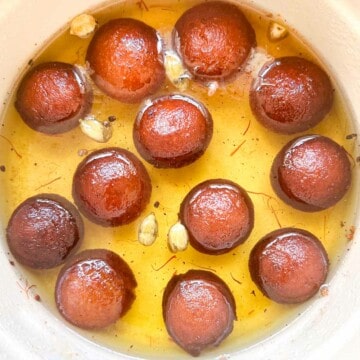
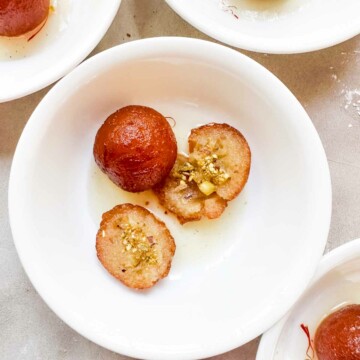
Dry gulab jamuns are gulab jamuns that are not served with the gulab jamun syrup. Instead, they are briefly soaked in the syrup and then coated with either sugar or coconut flakes before being served. They are a great dessert that easily transports, making them ideal for holiday dessert boxes. You can easily make any gulab jamun recipe like my original gulab jamun recipe or my stuffed gulab jamun recipe into a dry gulab jamun by soaking the jamuns for 15-20 minutes and then removing them from the syrup and coating them in your desired coating.
Substitutions for coconut flakes
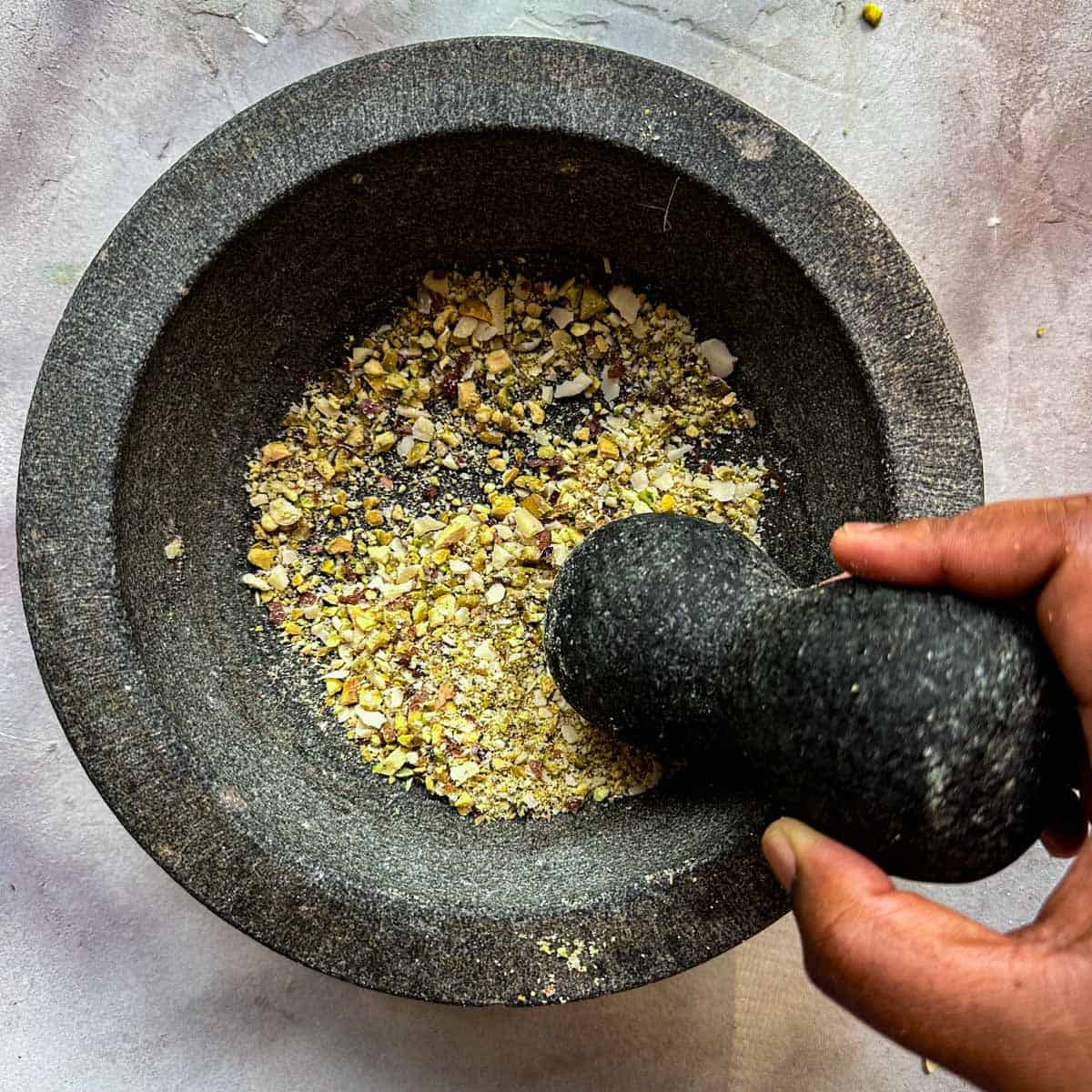
My recipe for gulab jamuns use unsweetened coconut flakes to coat the exterior of the jamuns. This packs extra flavor, crunch, and visual appeal. However, you can opt for other coatings:
- Finely crushed pistachios or other nuts
- Decorating sugar
- Sprinkles
- Coco powder
What to do with leftover gulab jamun syrup
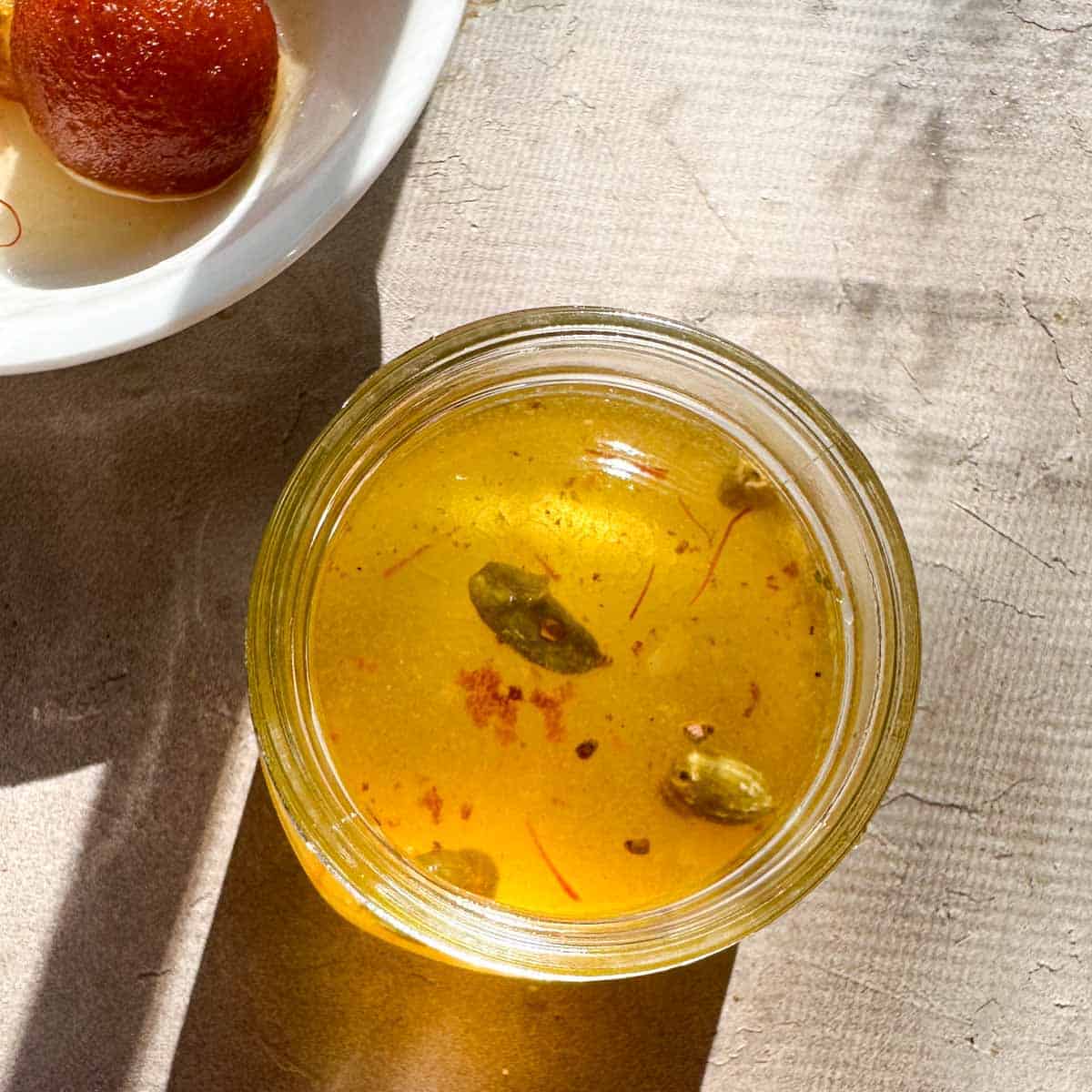
Dry gulab jamuns still need to soak in gulab jamun syrup for 15-20 minutes so that they can absorb all the flavor and stay moist for long periods of time. However, this results in an excess of syrup. You can use the syrup to craft cocktails, to drizzle on top of pancakes, or flavor your morning coffee. Check out this blog post which goes into detail on using making and utilizing the leftover syrup or try out my gulab jamun cocktail recipe which uses this syrup!
Dry gulab jamuns make the best gifts
Dry gulab jamuns are the perfect holiday gift because they transport well compared to regular gulab jamuns, which need to be packaged carefully so the syrup doesn't spill. It's easy to make large batches of gulab jamuns and you can roll the jamuns in different coatings to give your holiday box a festive feel. Check out this blog post which has other dessert and snack ideas for holiday and Diwali boxes.
Tips for making dry gulab jamuns
Here are some high level tips on making dry gulab jamuns. However, check out this detailed blog if you want in-depth tips and solutions for common mistakes when making gulab jamuns.
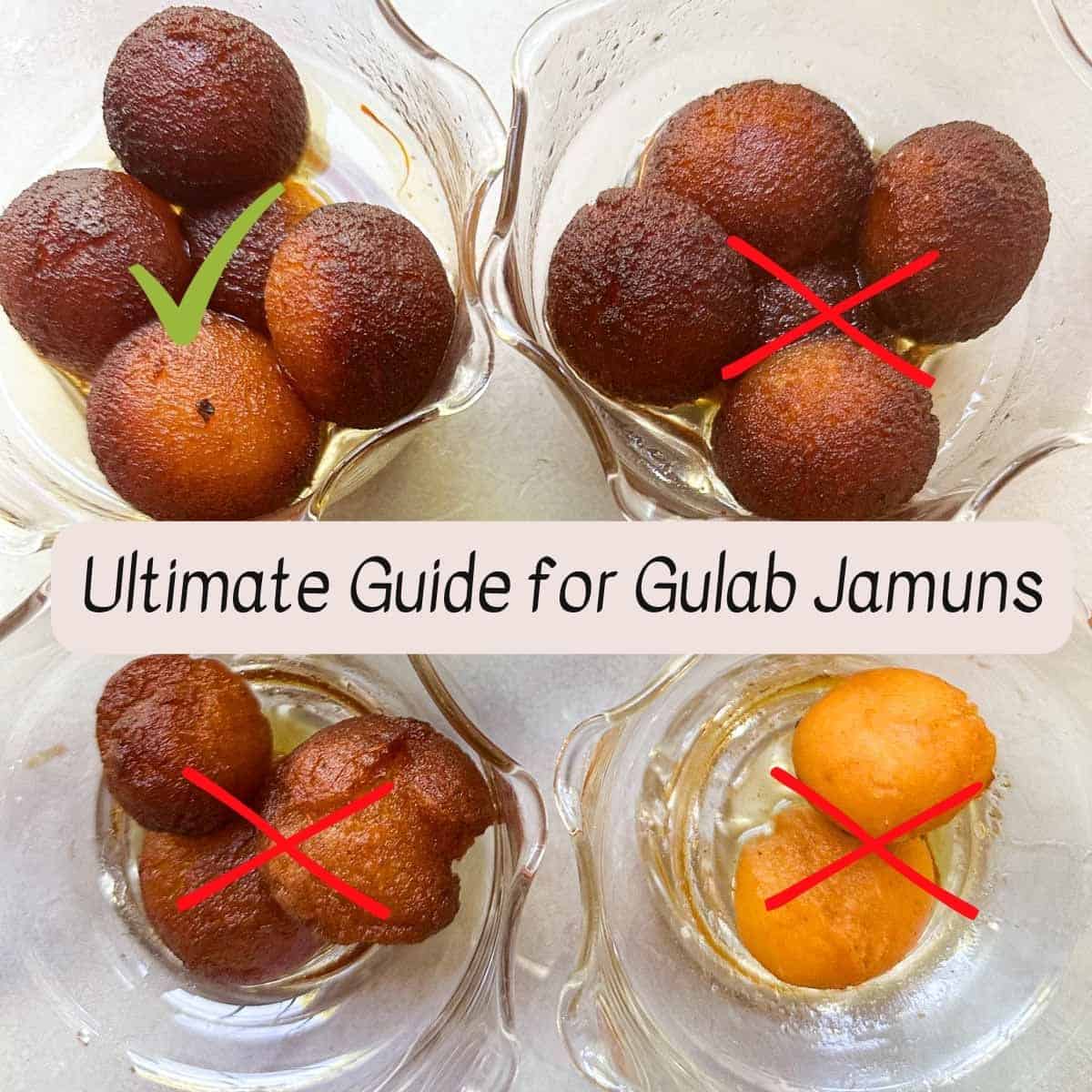
- Soak the jamun in warm syrup right after frying. Soaking the jamun while its still warm will ensure that it is soft and spongy.
- Allow the gulab jamuns to soak in the warm syrup only for 15-20 minutes. It's important that the gulab jamuns don't become too soft in the syrup.
- Roll the dry gulab jamun in coating immediatley after removing them from the syrup. This will help the syrup on the exterior bind to the coating.
- Fry gulab jamuns at 325 Farenheit for 3-4 minutes. Frying low and slow is key. Gulab jamuns have milk solids in them which can burn easily. You need to fry low so that the entire jamun can cook through before the outside browns. Try to keep the range when frying between 325 and 350 Fahrenheit. It should take approximately 3-4 minutes for the gulab jamun to get a deep brown. If it gets browner faster than this, it is an indicator that the oil is too hot. Frying too quickly will yield a gulab jamun that is hard and gummy at the same time.
- Use whole milk powder,
 not low-fat milk powder, for a tender and fluffy jamun. If you are in a pinch and need to use low-fat milk powder, add an additional 1 tablespoon of ghee to the dough. Low-fat milk powder tends to need more moisture so you may need to add additional increments of heavy cream in 1 teaspoon increments until the dough is supple like play dough.
 - Use pressure and ghee create smooth balls. Greasing your hands with ghee helps create a smooth exterior on the gulab jamun balls.
- Serve dry gulab jamuns at room temperature.
- Package gulab jamuns in tiny cupcake liners when adding them to holiday boxes.
 not low-fat milk powder, for a tender and fluffy jamun.
Storing gulab jamuns
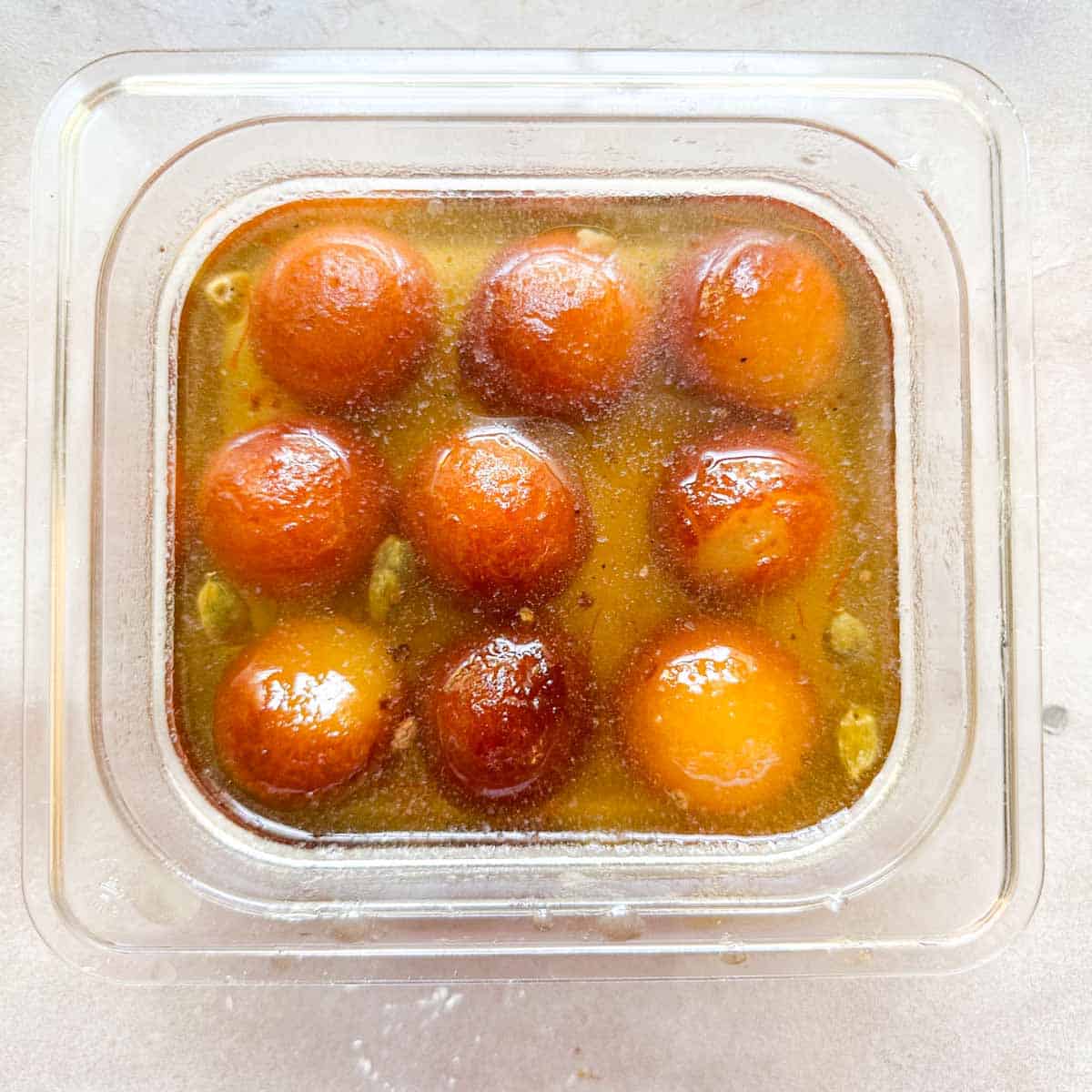
Store gulab jamuns in the syrup in a wide tupperware with a lid. Do not over-crowd or stack gulab jamuns on top of each other as they can break. You can store gulab jamuns in the fridge for up to 10 days.
Other gulab jamun recipes
Frequently Asked Questions
You can store gulab jamuns in the fridge for up to 10 days.
Gulab jamuns are so delicious served warm with either vanilla ice cream or pista ice cream.
Dry gulab jamun is soaked for less time in the gulab jamun syrup, is served without the syrup, and is typically coated with coconut flakes or crushed nuts.
Yes! Use whole milk powder for a tender gulab jamun with a more pronounced milk flavor. If you are in a pinch, you can use low-fat but compensate by adding 1 tablespoon of ghee. You may have to add additional heavy cream in 1 teaspoon increments until the dough is supple as low-fat milk powder tends to need more liquid.
There are many reasons ranging from using too much leavener (baking powder/baking soda) to the consistency of the dough. Check out this blog post that goes into detail about why your gulab jamun may have broken in the oil and how to fix it.
There are many reasons ranging from using too much leavener (baking powder/baking soda) to the consistency of the dough. Check out this blog post that goes into detail about why your gulab jamun may have broken in the syrup and how to fix it.
There are many reasons ranging fromusing too much flour to not frying the jamuns properly. Check out this blog post that goes into detail about why your gulab jamun may be hard and how to fix it.
You can buy milk powder at most grocery stores or online.
You can use gulab jamun as syrup for pancakes or cocktails. This blog post gives many ideas on what to do with extra gulab jamun syrup.
Dry Gulab Jamun
Ingredients
Dough Ingredients
- ½ cup (50 g) whole milk powder (Refer to Note 1 about sourcing milk powder)
- ⅓ cup (50 g) all-purpose flour
- ¼ teaspoon baking powder
- ⅛ teaspoon sea salt
- 1 tablespoon ghee or butter melted, plus more to grease your hands
- ⅓ cup (75 g) heavy cream
Syrup Ingredients
- 1 cups sugar
- 1.25 cups water
- 1-2 cardamom pods lightly crushed
- 5-10 saffron strands
- ¼ teaspoon rose water (Optional)
- ½ teaspoon lemon juice
Coating
- ½ cup unsweetened coconut flakes or finely crushed pistachios
Frying Ingredients
- vegetable oil - enough to fill pot 3 inches deep for frying
- ¼ cup ghee (this helps add flavor to the oil) to add to fry oil for flavor (Optional)
Instructions
- Note before starting: If you have a scale, this recipe benefits from measuring out everything in grams! Different types of milk powder can have different volume measurements (note 1 explains more).
- In a large bowl, ½ cup (50 g) whole milk powder , ⅓ cup (50 g) all-purpose flour, ¼ teaspoon baking powder, and ⅛ teaspoon sea salt and mix until all the dry ingredients are combined.
- Add in 1 tablespoon ghee or butter and rub it into the dry mixture to form a slightly coarse texture. This step to ensures that the dry mixture is coated in fat and will result in a tender jamun.
- Add in ⅓ cup (75 g) heavy cream to the dry mixture and knead for 1-2 minutes to form a supple dough that has no dry spots and feels like play dough. Do not over knead or else the jamuns will be chewy. Cover the dough with a damp cloth and let it rest for 5-10 minutes.If the dough feels tacky, then add 1 teaspoon of flour until it is no longer sticky. If the dough feels hard or tough, then add 1 teaspoon of heavy cream until it feels soft like play dough.
- Get a pot to prepare the gulab jamun syrup. Add 1 cups sugar, 1.25 cups water, 1-2 cardamom pods, and 5-10 saffron strands and place on the stove on medium heat. Allow the syrup to come to a boil and stir to ensure that all of the sugar dissolves. Turn the heat off, add ¼ teaspoon rose water and ½ teaspoon lemon juice, and mix. Keep the syrup on the stove as the gulab jamuns will be dunked into this syrup once fried.
- Uncover the gulab jamun dough that has been resting and divide into ~15 pieces that are approximately 10 grams each.
- Grease the palms of your hands with a bit of ghee.Take one piece of dough to work with while covering the others with the damp cloth. Using a little bit of pressure, roll the dough ball in between the center of your palms until a smooth, non-sticky, round ball is formed with no cracks. Set aside the ball under the damp cloth and repeat this process with the remaining dough while remembering to grease your hands as needed.
- Take a deep, heavy-bottomed pot for frying. Add ghee and enough oil to fill the pot ~3 inches deep. Heat the oil to 325° Fahrenheit. The oil can range between 325 and 350° Fahrenheit when frying.
- While you wait for the oil to warm up, check the temperature of the gulab jamun syrup. It should be warm, about 100 to 130° Fahrenheit. If not, turn the stove on low to warm the syrup up before turning off the heat.
- Once oil is hot enough, gently lower in gulab jamuns in batches into the oil with a metal slotted spoon. Constantly and gently rotate the gulab jamuns by creating small waves in the oil to ensure every side is cooked evenly without disturbing the balls. The gulab jamuns should take 3-4 minutes to completely cook and turn golden brown. Make sure the oil is not too hot as this will result in the outside browning before the inside is fully cooked and fluffy.
- Remove the gulab jamun with the slotted spoon and add them into the warm gulab jamun syrup. Using a different utensil, gently spoon some of the syrup to the top of the jamun to ensure the entire ball comes in contact with the syrup. Allow the gulab jamun to soak in the syrup for 15-20 minutes.
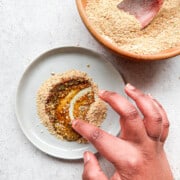
- Add ½ cup unsweetened coconut flakes to a medium plate. Gently remove the gulab jamuns from the syrup using a slotted spoon and roll them in the coconut flakes. Eat as-is or pack in mini cupcake liners to hand out in.
Notes and Tips
- (Note 1) Use whole milk powder and NOT low-fat milk powder for a tender and tasty jamun. If you only have low-fat milk powder then add an additional tablespoon of ghee to the dough. In addition, low-fat milk powder absorbs more liquid so you may have to add heavy cream in increments of 1 teaspoon until the dough is tender and supple. Some Indian milk powder brands are much more coarse than American brands so always use gram measurements. Indian milk powder is much coarser and 50g measures out to be closer to ¾ cup whereas 50g of American milk powder measures out to be ½ cup. Since American milk powder is more fine with a larger surface area, it absorbs more liquid and thus requires more heavy cream.
- If you are looking for detailed tips and tricks or are looking for solutions to common gulab jamun mistakes, then check out this blog post.
- If you have extra gulab jamun syrup, don’t throw it out! Filter it if needed and use it in cocktails or mocktails and as a syrup for pancakes/waffles. You can check out this blog post for more ideas on how to use the syrup.
Leave a Reply