

• Skip to primary navigation
  • Skip to main content
  • Skip to primary sidebar
Moon Rice
  • Home
  • Recipes
  • Classes
  • About
menu icon
go to homepage
  • Home
  • Recipes
  • Classes
  • About
    • Facebook
    • Instagram
    • TikTok
  • search icon
    Homepage link
    • Home
    • Recipes
    • Classes
    • About
    • Facebook
    • Instagram
    • TikTok
  • ×
    • A hand holding boondi laddu and the remaining laddus on a sheet tray.
      Boondi Laddu
    • Curried egg salad with cottage cheese and green onions on top of toast on a gray plate.
      High Protein Curried Egg Salad
    • Two slices of edamame chaat avocado toast. The toast has shelled edamame, cut red onions, tomatoes, green bell pepper, cilantro, salt, chaat masala, and thin sev on top.
      Edamame Chaat Avocado Toast
    • Whole coriander seeds next to ground coriander powder
      How to Stock Your Spice Pantry: Whole vs. Ground Spices
    • 10 essential Indian spices laid out in their spice containers. The spices from bottom left to the top are green cardamom, Kashmiri chili powder, turmeric powder, cumin seeds, chaat masala, coriander seeds, black peppercorn, cinnamon sticks, mustard seeds, and asafetida (hing).
      10 Essential Indian Spices + 30 Recipes That Use Them
    • Fluffy stovetop basmati rice in a bronze platter.
      How to Cook Basmati Rice on the Stovetop
    • 4 indian vegetable sides photos. Top left is of cabbage poriyal, top right is of a chickpea chaat salad, bottom left is of crispy kale chaat, and bottom right is of tamarind glazed brussel sprouts.
      Indian Vegetable Side Dishes
    • Pictures of high protein Indian dishes like Black eyed peas curry, chow chow dal, chickpea sundal, and malai chicken kebabs.
      High Protein Indian Recipes
    • A plate with Indian turmeric yellow rice.
      Indian Turmeric Yellow Rice
    • Two glasses of chaat spiced pomegranate mocktail with a candied ginger garnish.
      Chaat Spiced Pomegranate Mocktail
    • A bowl filled with a kala chana or chickpea salad. The salad has black chickpeas, pickled onions, cucumbers, tomatoes, mint, cilantro, and toasted peanuts.
      Kala Chana (Black Chickpea) Salad
    • A bowl with kala chana sundal or sauteed black chickpeas with Indian spices in a small bowl.
      Kala Chana Sundal | Sautéed Black Chickpeas
    Home > Indian Culture

    History of Chai

    By: Shri Repp • Posted: 10/31/22 • Updated: 04/04/24

    The history of how chai became a mainstream part of Indian culture is a complicated one rooted in colonialism and capitalism. Learn about the origin of this beloved black tea that rose in popularity.
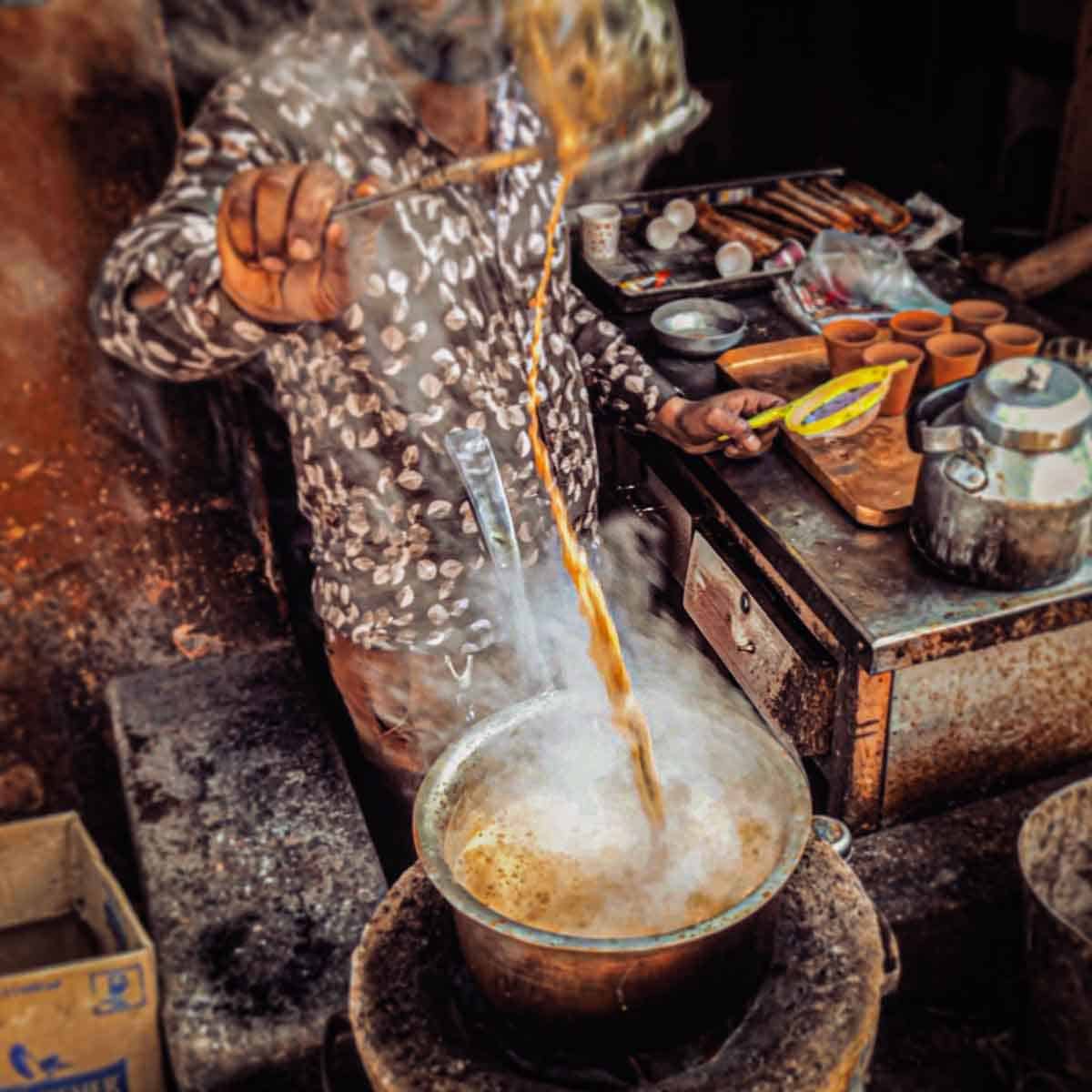
    Chai walla or tea vendor making chai on the street sides of India
    Chai walla or tea vendor making chai on the street sides of India
    Jump to:
    • China's monopoly on tea
    • Theft of tea from China
    • British colonization brought tea to India
    • Rise of tea in India
    • Indian people make chai their own
    • It's chai not chai tea
    • Chai Recipes

    For a long time I thought chai was ingrained in Indian history. We serve our guests chai to welcome them into our homes, it is the morning ritual that coaxes me out of bed, and it is my one of my favorite drinks to get from street side stalls in India. I thought chai was inherently Indian.

    However, this unassuming drink that is now a staple in South Asian households has a turbulent past that is rooted in colonialism and capitalism.
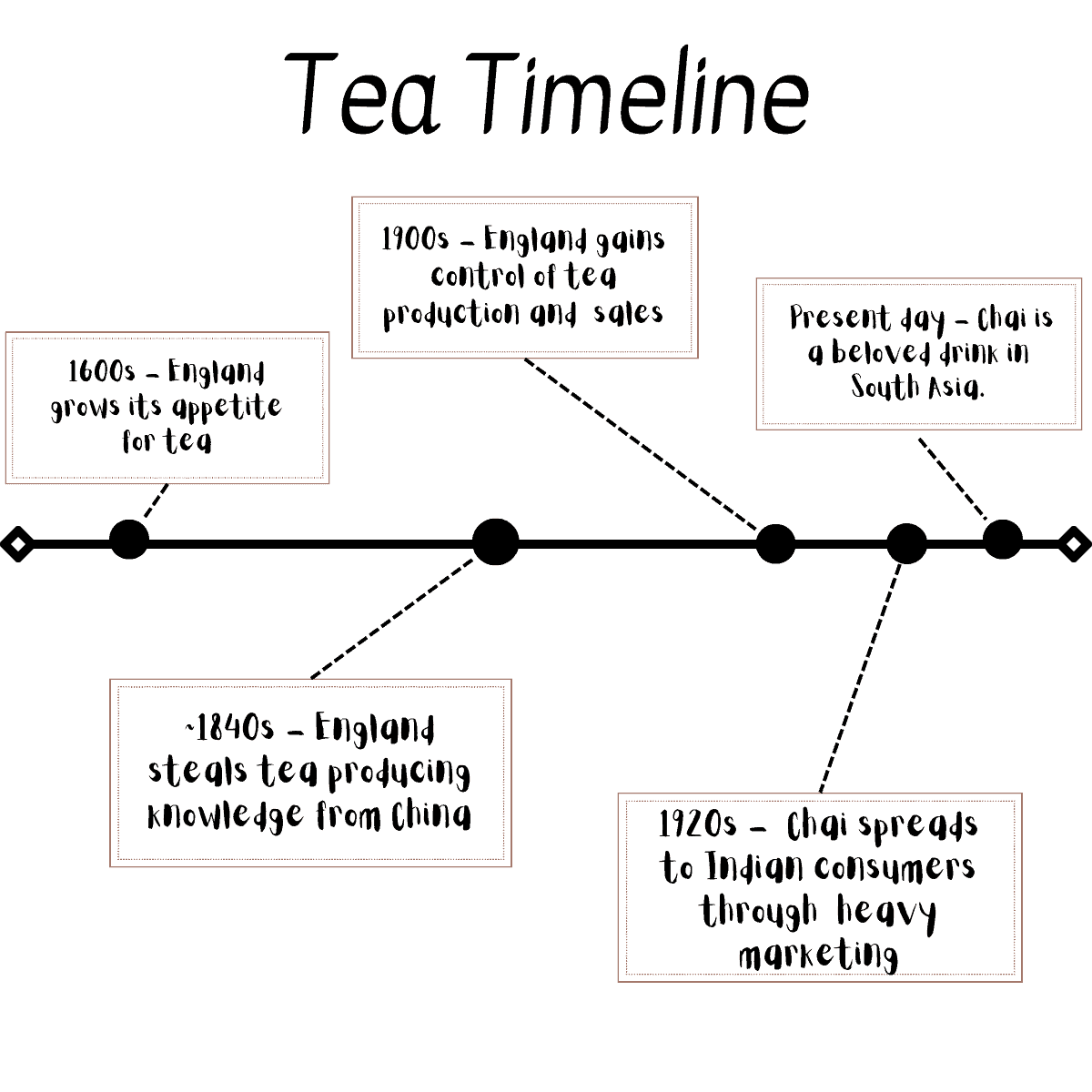
    Chai really became a mainstream part of the Indian culture around the 1920s. So we’ll back up to the 1600s to learn how it gained its popularity.

    China's monopoly on tea

    Around the 1600s, Europeans had a huge appetite for tea after traveling east and learning about it from China. The British then started drinking tea with milk and sugar. Sugar, which was being imported to England from the West Indies, further spread the love for tea in England. 

    At the time, China was the country with the expertise to grow and sell tea. They were the ones who had a monopoly on tea production and sale. 

    China, however, only accepted silver in exchange for their tea leaves. At one point, the British bought so much tea from China that their silver reserves were running low. This really threatened the British economy and so the British sought to sell China other goods to balance the trade deficit.
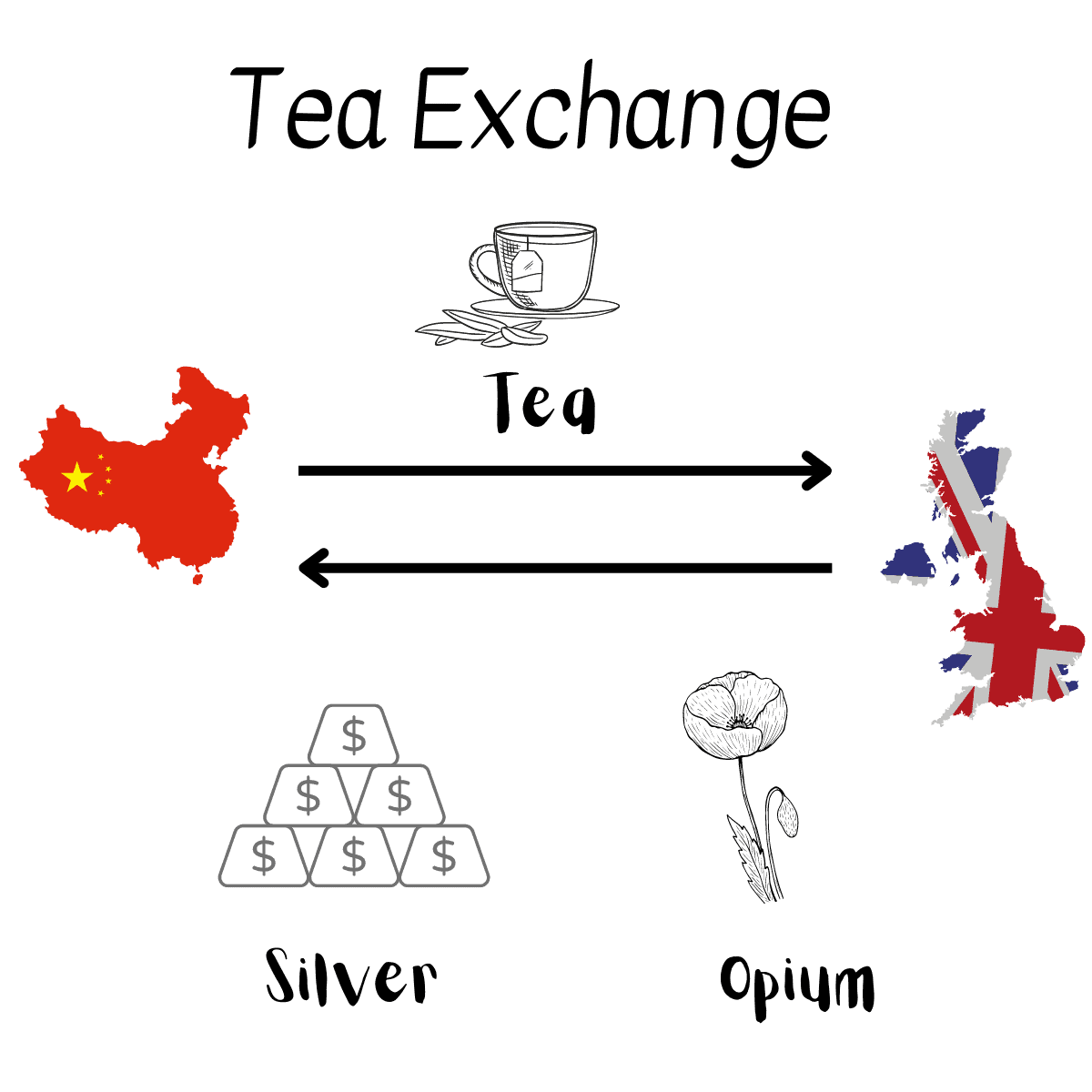
    Infographic representing trade between China and Britain for tea. China sold tea and Britain sold silver and opium
    Trade between China and Britain for tea. China sold tea and Britain sold silver and opium

    At this point, Britain started trading opium in exchange for tea. This deeply affected the citizens of China, who became addicted to the drug, and led to the opium wars. As a result of this contentious exchange, the trade lines between China and Britain were disrupted. Britain still wanted tea and sought other ways to meet their demand for tea that didn’t involve China.

    Theft of tea from China

    This is when the British turned to India, a country they started gaining more and more control over. So what did the British do? The British tried to grow tea in India but lacked the expertise to do so.

    A British spy, named Robert Fortune, snuck into China, and pretended to be one of the locals. He learned how to grow tea, smuggled out Chinese tea plants and tea experts, and brought this knowledge to India. 

    British colonization brought tea to India

    Even with the expertise that was stolen, the British still struggled to grow tea in India. The first iterations of growing tea were in the northern state of Assam. However, the stolen Chinese variety of tea did not grow well in Assam. Assam's high temperature and low altitude wasn't suited to the Chinese tea plant.

    However, this same Chinese variety was grown in Darjeeling which is a city in the northern part of West Bengal. It’s lower temperatures and high altitudes led to some success in the Chinese tea plant growing there. The British started gaining some success but not much.

    Eventually, the British figured out that there was an indigenous tea plant that grew in Assam. The Assam tea plant was marked by its broader leaves compared to the narrow leaves of the China tea plant. The British started growing the Assam tea plant throughout India with the exception of Darjeeling. Darjeeling to this day is a standout tea producer in India. Darjeeling has a hybrid tea that is a cross between the Assam variety and the Chinese variety whereas the rest of India predominately grows the Assam tea variety.

    The production of tea in India rapidly started growing with the help of Indian indentured labor powering it. Even during the boom from the 1800s to the early 1900s, tea wasn’t for the Indian population. Tea was still a luxury good that was mainly for English consumption.

    Rise of tea in India

    After World War One, when the tea prices in Britain crashed, the British started looking for ways to increase tea sales. The British sold high quality tea to the Europeans, but they wanted to make money selling the low quality tea.

    The low quality of tea that they sold is known as CTC (crush, tear, curl) tea. It is a machine-processed tea that is strong and bitter and was sold to the Indian people. You can learn more about CTC tea here.

    Although the British wanted to sell this tea, the Indian population did not have a habit of drinking it. In the 1920s, the British East India Company started a heavy marketing campaign to market the product to the Indian consumer.
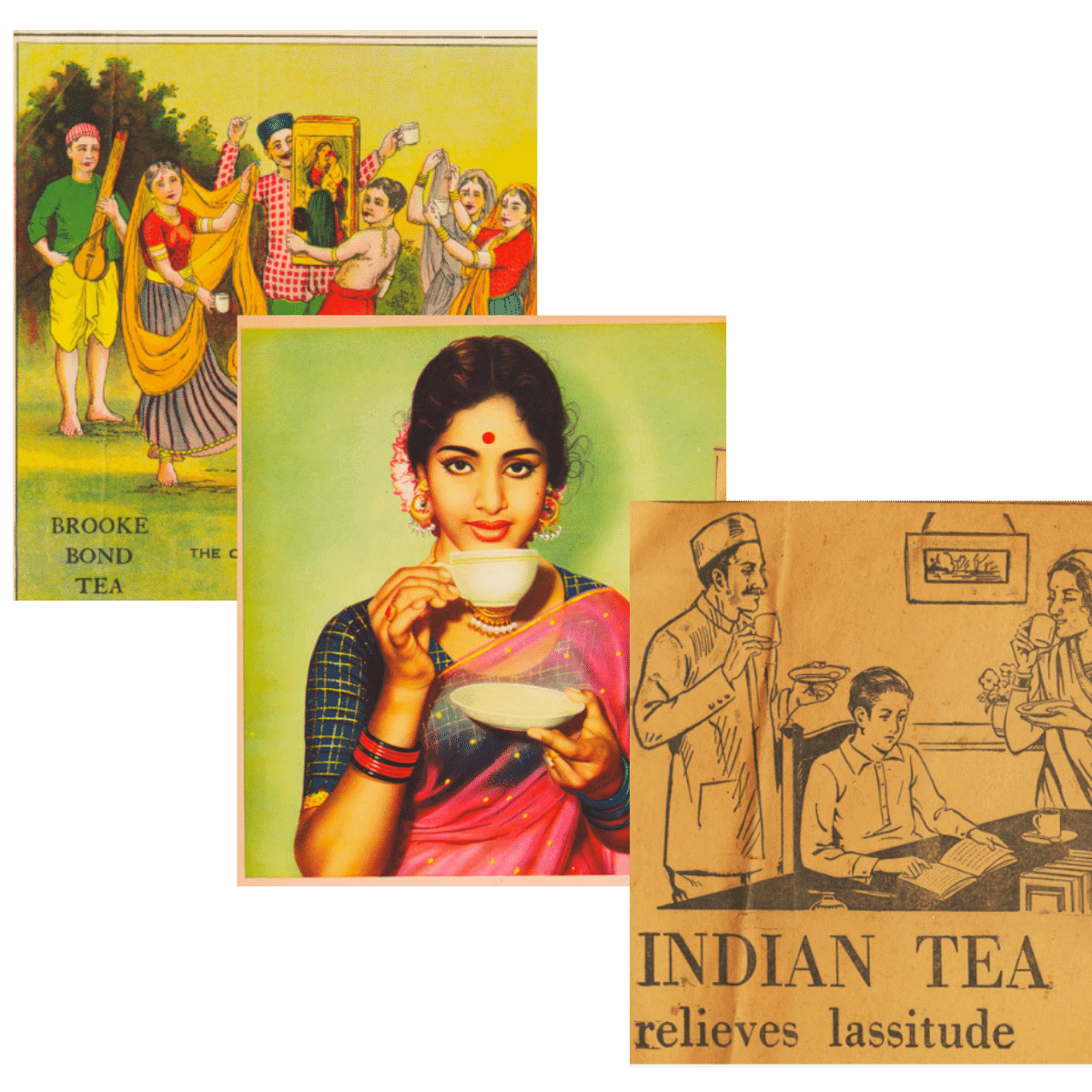
    Marketing campaign posters selling tea to the Indian population
    Marketing campaign posters selling tea to the Indian population

    The British gave tea out for free in the beginning. They convinced lobbies to give Indian workers a tea break in which they could consume tea. They even put up signs in different Indian languages to teach people how to brew tea. Tea shops were setup at the newly built railway stations which helped tea spread throughout India.

    In the beginning, the nationalist movement, folks like Gandhi who were fighting for Indian liberation, boycotted tea. They saw consumption of tea as a symbol of British oppression. Despite that resistance and with decades of marketing, tea became more and more popular throughout India.

    Indian people make chai their own

    When tea started spreading throughout India different tea vendors, also known as chai wallas, started adding spices to the tea. The practice of adding spices to boiling water and drinking it was already a part of Indian culture, the tea was just the new addition. Tea was transforming to fit the Indian taste palate.
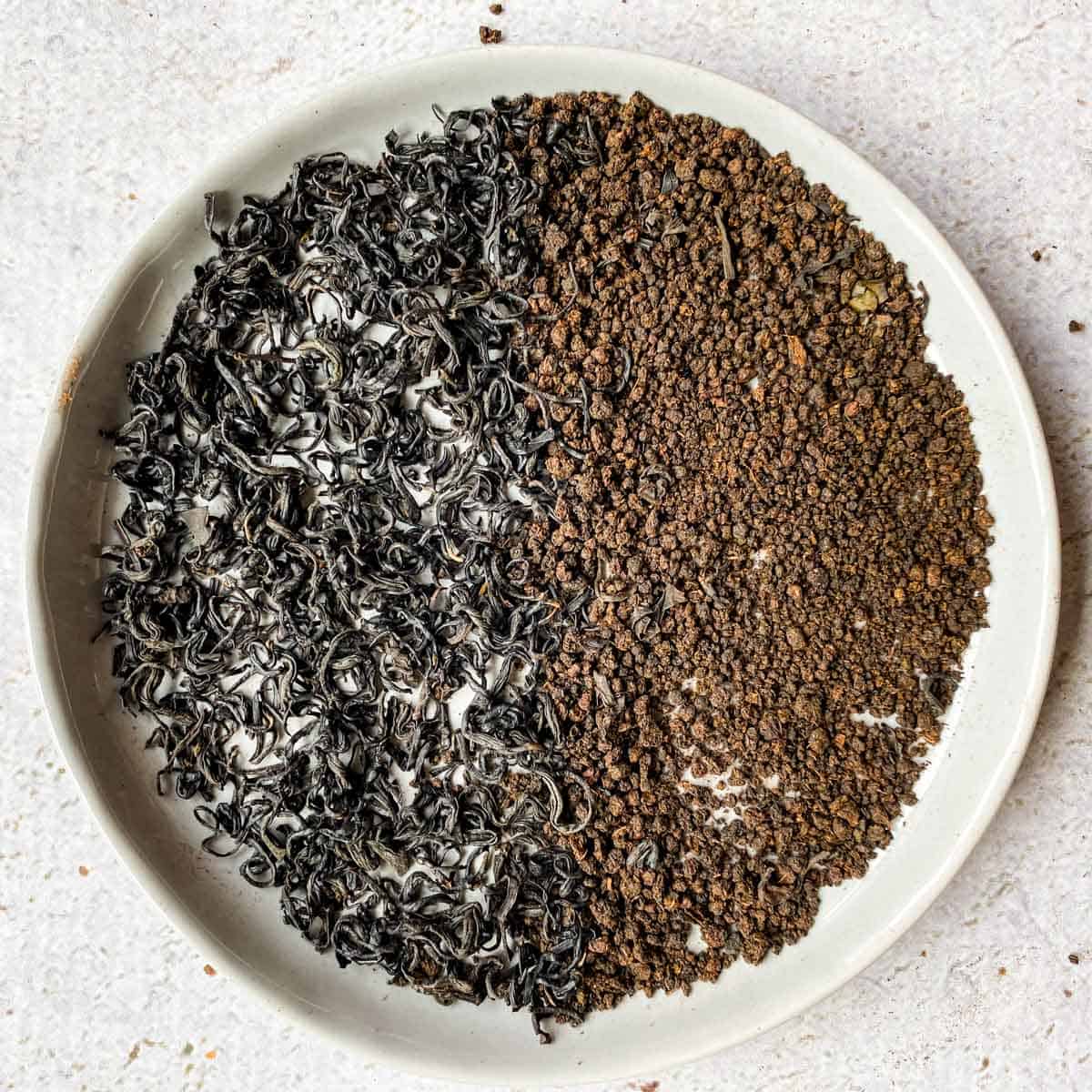
    Orthodox tea pictured on left vs. CTC (crush, tear, curl) tea pictured on right

    The CTC tea was bitter and strong compared to the British orthodox tea that was more delicate. However, this strong CTC tea could stand up to the spices that the chai wallas added. This resulted in a delicious cup of chai that was well balanced.

    Some say that the act of adding spices was an act of protest in itself. By adding spices to the chai, it reduced the amount of tea leaves needed to brew a cup. This probably didn’t curb tea consumption; however, it was a way that Indians were able to make tea their own.
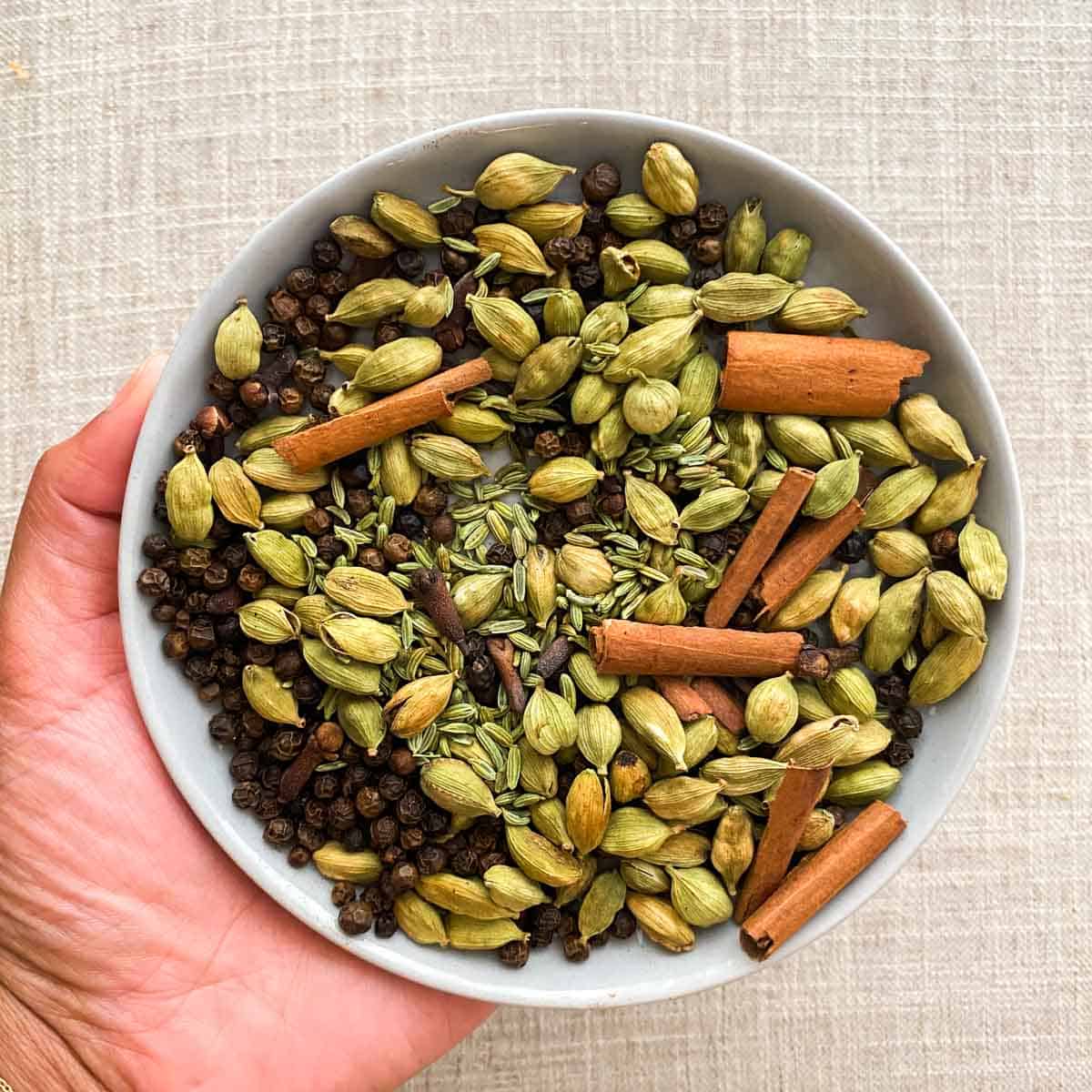
    Toasted cardamom, black peppercorn, cinnamon, fennel, and cloves for chai

    Every household, including mine, claims that their chai masala recipe or spice blend is the best. This pride I imagine comes from taking a once bitter drink and transforming it into something quite delicious.

    It's chai not chai tea

    In the United States, the popularity of chai is increasing. Mainstream coffee shops often refer to the drink as "chai tea" or "chai tea latte" which makes Indians cringe upon reading.

    The reason for this is that chai is a Hindi word which means tea. When a sign says "chai tea" it means "tea tea" which is redundant. It signals that the salesperson doesn't understand the meaning behind the drink as they are profiting from it. It is really important that if we consume this drink that we learn how to properly refer to it.

     So when referring to this beloved tea, just say chai.
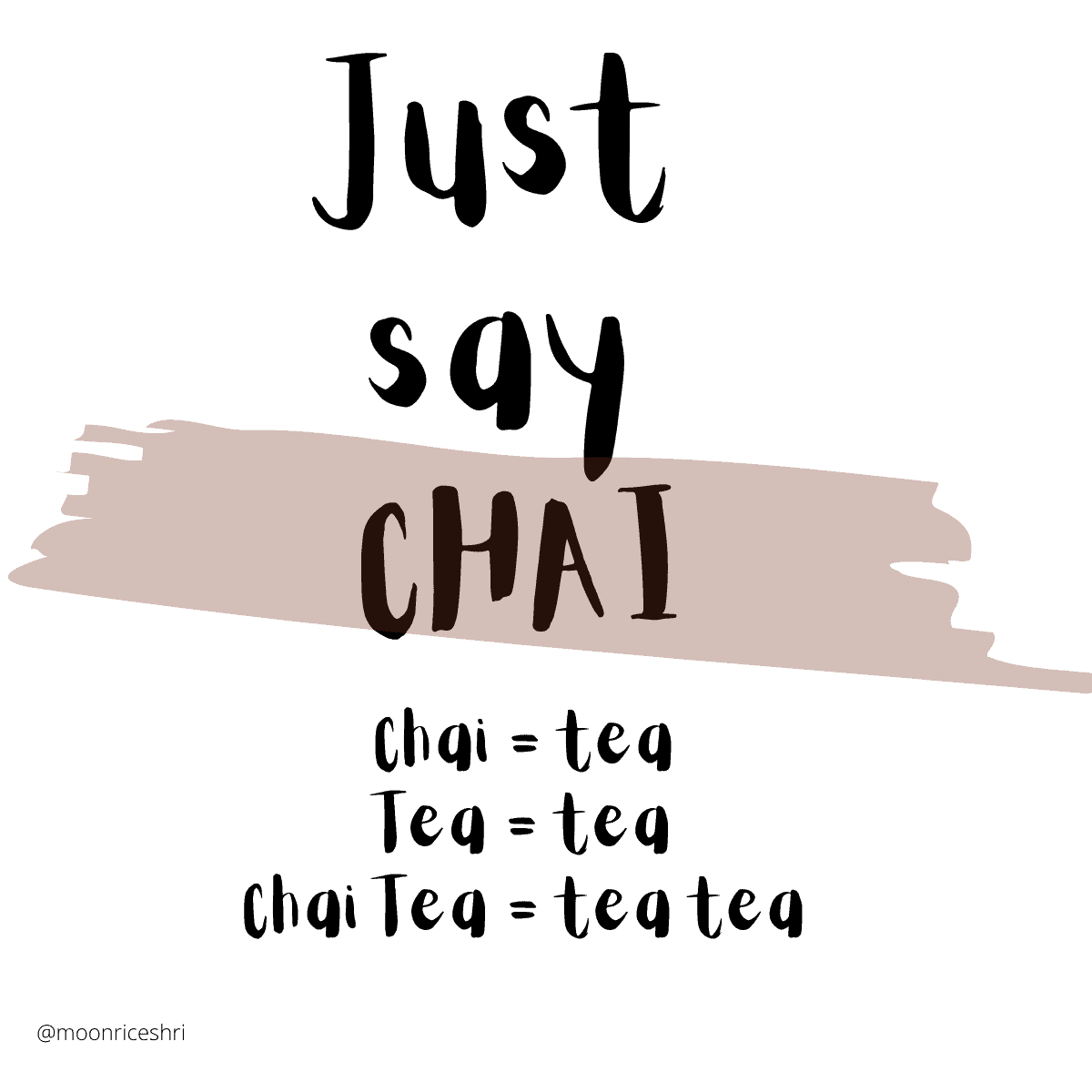
    Infographic that conveys that saying chai tea is redundant so you should "just say chai".

    Chai Recipes

    There are some delicious chai recipes on the blog. Try out my homemade chai masala! It is a spice blend with warming spices like cardamom, cinnamon, fennel, and black peppercorn that you can use to make chai or to spice up desserts.
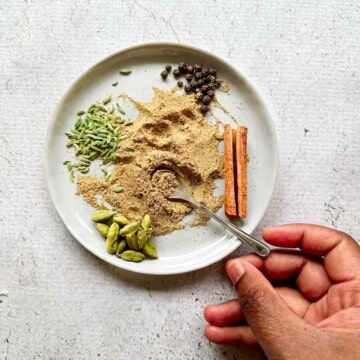
    • Chai masala or spice blend on a small plate with whole spices sorrounding it. A small spoon with chai masala on the plate with a brown hand reaching for the spoon
      Chai Masala Powder | Indian Tea Spice Mix
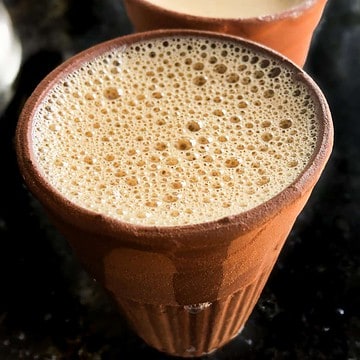
    • Hot, frothy, masala chai in an Indian clay cup.
      Masala Chai | Indian Spiced Tea
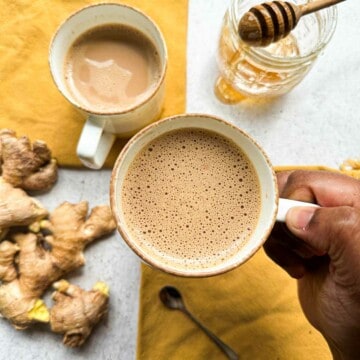
    • Ginger chai in two cups. Yellow napkins in the background along with honey and fresh ginger root. A brown hand holding one cup of chai in the center.
      Inji Chai (Indian Ginger Tea)
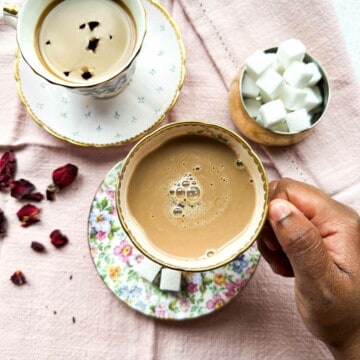
    • Two floral tea cups with rose chai. A brown hand holding one rose chai cup. A small bowl with sugar cubes in the background. Dried rose petals in the lower left of the photo
      Rose Chai (Indian Rose Tea)

    Indian Chai Party

    Also checkout my blog post on throwing an Indian chai party. It is my way of reimagining the British tea party into an Indian chai party. There are tips and tricks on how to host a party. It includes a list of delicious food and decor to throw the event.
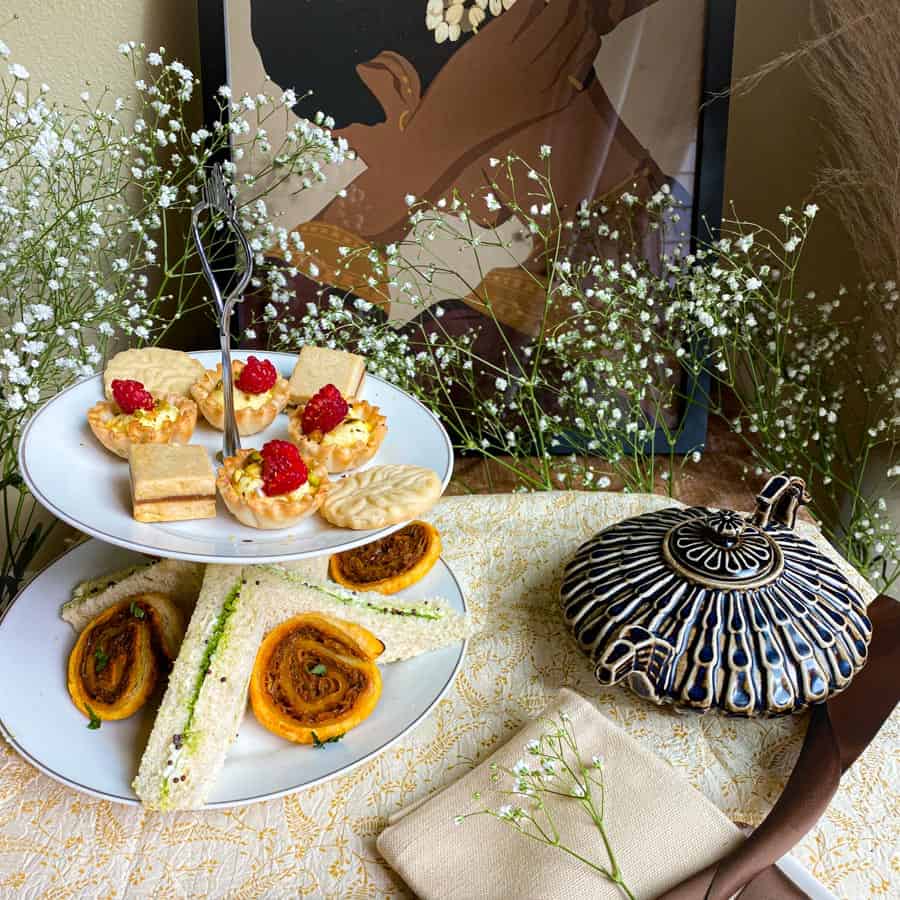
    Tea party setup with picture of a woman in background and mint chutney sandwiches, masala pinwheels, saffron tarts, and a teapot
    « Chai Masala Powder | Indian Tea Spice Mix
    Indian-Inspired Thanksgiving Menu »

    Reader Interactions

    Comments

    1. saurav gupta

      January 14, 2025 at 9:39 am

      Hi Shri, I am a Tea enthusiats and so much so I even invested and incubated a chai company associated with indian railways. https://www.youtube.com/watch?v=ti4OmWLHyxY I have been thinking about publishing a book on history of tea in india, cultural nuances in different states and chai drinking by royalities. Your blog renewed that interest so I wanted to see if you want to co write/partner in this endevour. Looking fwd . Saurav WA +14088814432. https://www.linkedin.com/in/sauravgupta79/

      Reply

    Leave a Reply Cancel reply

    Your email address will not be published. Required fields are marked *

    Recipe Rating


    Primary Sidebar

    Photo of Shri Repp waving

    Hi! I'm Shri!

    I'm a former Software Engineer turned full time culinary instructor and food writer. My mission with the Moon Rice website is to be your go-to resource for Indian cooking by providing well-tested recipes and in-depth insights that empower you to confidently cook Indian food at home.

    Learn more
    International association of culinary professionals digital media awards finalist badge
    Moon Rice is an IACP finalist for best individual food blog!

    Indian Food Science

    • Which rice is the best for making dosas. Four cups with ponni rice, idli rice, basmati rice, and jasmine rice on a plate.
      What Rice Yields the Best Dosa?
    • Crispy puris for pani puri
      Crispy Puris for Pani Puri
    • 12 brands of ghee spread on parchment paper with the names of the brand above them in marker. Describing the brands from top to bottom and from left to right. Deep brand ghee is on top with a liquidy and grainy consistency that is white. Laxmi brand is creamy and pale white. Amul brand is grainy but solid and also pale. Next row has simple truth organic, 365 foods, and O Organics. Simple truth is liquidy, light yellow, and grainy. 365 foods is grainy, liquidy, and yellow. O organics is yellow and liquidy. Next row has organic valley that is smooth, creamy, and pale yellow. Ancient organics is creamy and light yellow. 4th & heart is light yellow and creamy. Nanak is bright yellow, grainy, and liquidy. Pure Indian foods is grainy, slightly liquidy, and light yellow. Last but not least is homemade ghee made from kerry gold butter and it is liquidy, slightly liquidy, and darker yellow.
      Best Brands of Ghee To Buy
    • A photo with four glass cups of gulab jamuns. 3 of the glasses have an x icon indicating that those are mistakes. 1 glass has a green check mark indicating it is the correct way to make a gulab jamun.
      Common Gulab Jamun Mistakes and Tips for Solving Them

    Indian Cocktails/Mocktails

    • Nimbu pani cocktail with limes and lime zest in the background
      Spicy Nimbu Pani Cocktail | Indian Lime Drink
    • A brown hand holding lychee rose mocktail in a glass with pink hued glasses in the background.
      Lychee Rose Mocktail
    • Indian style watermelon juice with chaat masala
      Indian Style Watermelon Juice with Chaat Masala
    • Gulab jamun cocktail or a saffron gin cocktail in a coupe class with a strand of saffron on the top.
      Gulab Jamun Cocktail (Saffron Gin Cocktail)

    Footer

    • Copyright © 2024 - Moon Rice
    • Recipe Index
    • About
    • Privacy Policy
    • ↑ back to top